There were a number of commentators who noted the double dissent today of Fisher and Plosser. I looked at that and wondered how common dissents were on the FOMC.
One of the things that Fed-watchers have to realize is that vote disclosure is a relatively new thing at the FOMC. It started in 1982, and became regular in 1984. In the earlier days, the internals of the FOMC were even more of a ?black box? than they are today. In order to gauge any policy change, one would have to look at the effect of open market actions on Fed funds; there was no announcement.
Late in the Volcker Era, the FOMC began announcing the votes on policy. Early in the Greenspan era, the FOMC would publish a statement, and indicate who dissented. Finally, they began recording the reasons for the dissent in the middle of Greenspan?s tenure.
Over the past 25+ years, how common has dissent been?
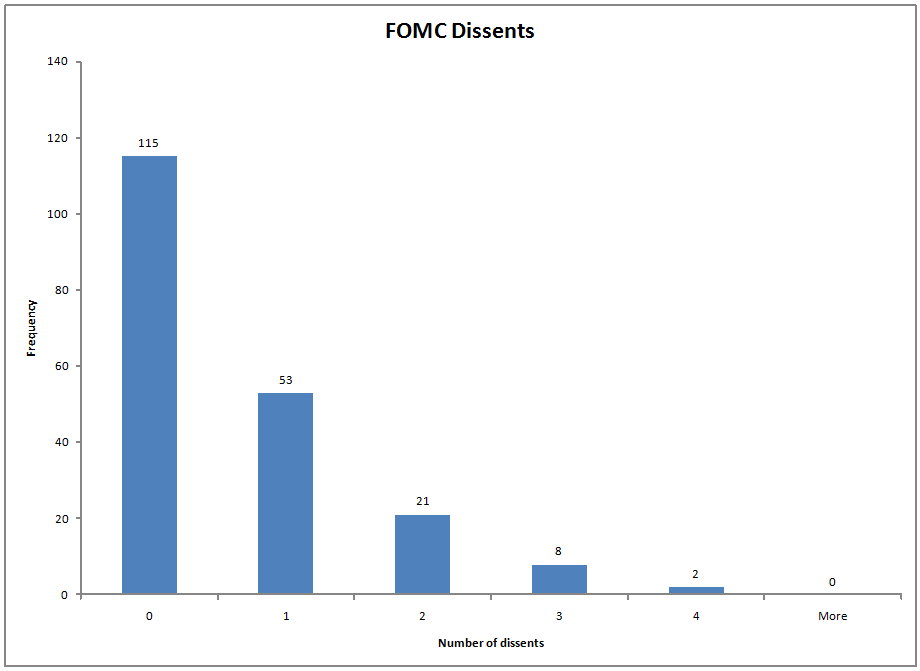
Single dissents happen about 27% of the time, and double dissents 10% of the time. Dissents of three and four occur 5% and 1% of the time.
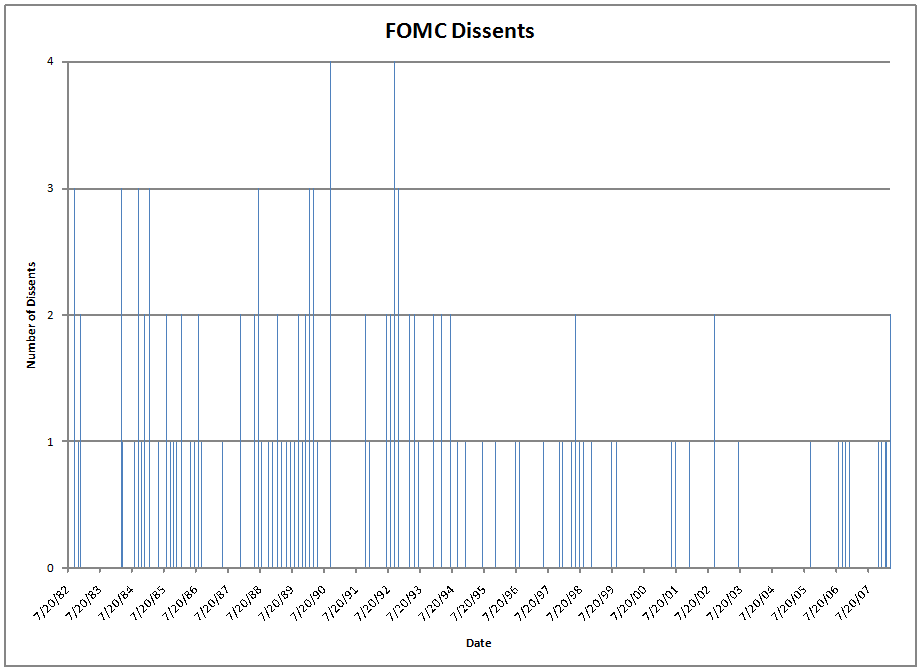
The two quadruple dissents occurred during the 1989-1992 easing cycle, when commercial real estate was in the tank. Both occurred at meetings where no action happened, and the alternative was loosening.
In general, high levels of dissent occur near cycle turning points. That said, in the latter part of the Greenspan era, discipline was tight enough that dissent was rare. Wait, how does dissent vary among Fed Chairmen?
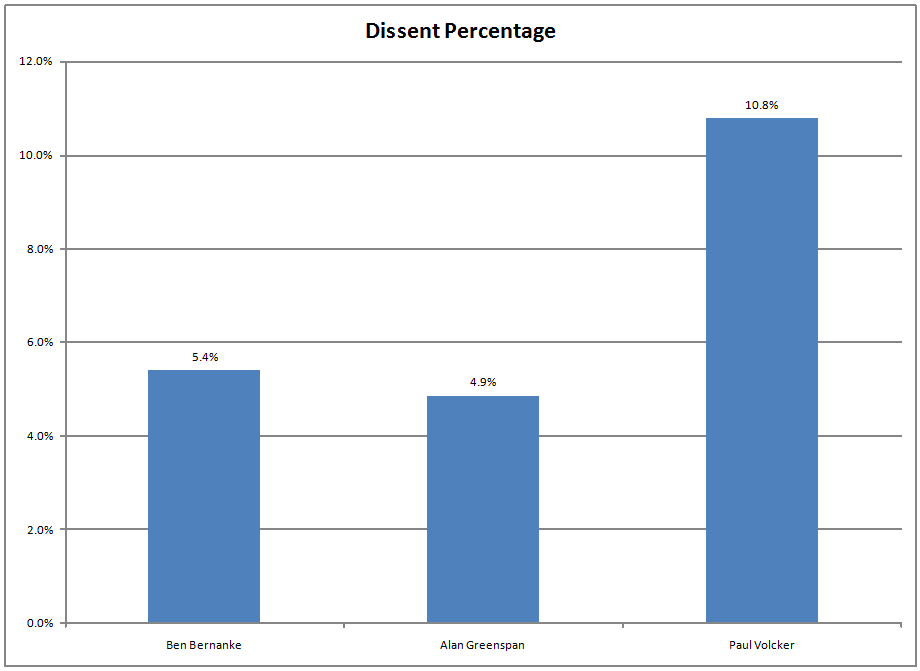
For Volcker we only get the latter part of his tenure, but dissent was relatively common. For Greenspan, you can divide his tenure into two parts. Prior to 1993, dissent was common, but after that, he effectively brought the remainder of the FOMC into lockstep. He was very effective at controlling meetings, as was noted by Laurence Meyers.
http://www.federalreserve.gov/boarddocs/speeches/1998/199804022.htm
Look at this graph for an example of how Greenspan got stronger over the years:
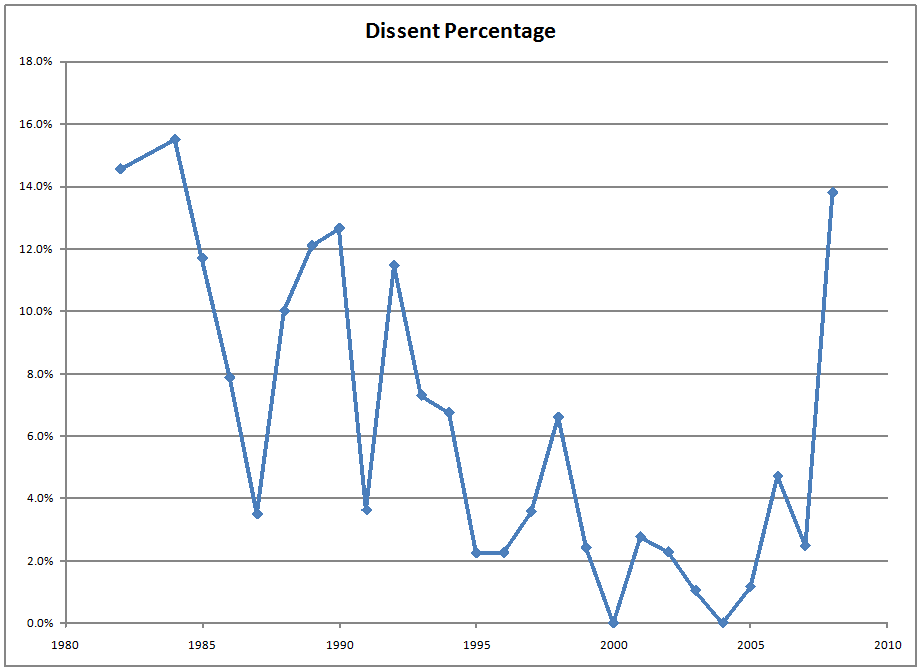
Bernanke is still in his break-in phase, and he is faced with the difficulties of an easing cycle. Dissent is more common easing cycles:
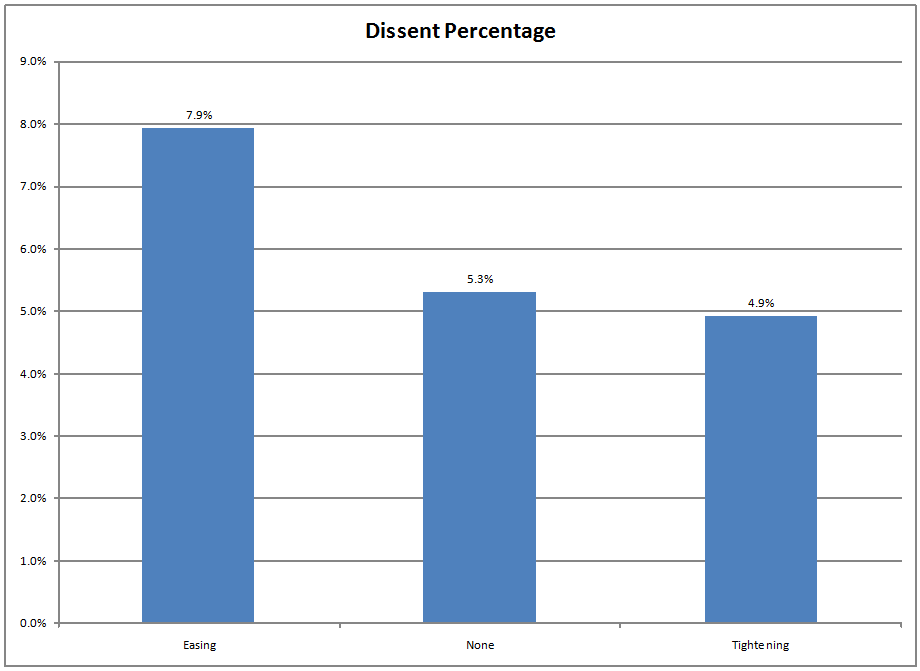
Personally, I would not make that much out of a double dissent at this phase in the FOMC cycle. This is the time that we should be seeing dissent ? early in Bernanke?s tenure, and loosening. Also, Bernanke is taking a looser hand to the remaining Governors ? he wants them to speak their minds. It is much the same way it was when he was an economics department chairman, except now the stakes are higher. Much higher, Ben, if you are reading this. (I harbor no illusions here, I know a few people read me inside the Fed, but my thoughts aren?t worthy of the attention of any of the Fed Governors. They are busy people.)
Now, that said I would like to point to some comments on the current FOMC actions by Paul Volcker. I?m glad he is still around. He is one of the few people who have instant credibility when talking about the current Fed actions.
In one sense his main point is that the Fed is charged with protecting banks that they regulate. They are supposed to act in the interest of all Americans, and when it intervenes on behalf of investment banks that they don?t regulate, or one in particular, Bear Stearns, there is a question as to whether it is right for them to do so.
When Volcker was Fed Chairman, derivatives were not an issue. They are now, and the interlinkages almost require a rescue. Now, better that the Fed should regulate investment bank leverage, particularly if they are lending to investment banks now. I am not a fan of regulation or central banks, but if we are going to have a complex financial system with derivatives and central banks, they need to be regulated by the central bank. (Let?s just go back to a gold standard, okay? 🙁 Yeah, I didn?t think so.)
There are real problems with what the current FOMC is doing, but to me it seems the best solution at present. Greenspan should not have lowered rates so much in 2001-2002, nor should he have raised them so much in 2004-2006. There were ways to avoid this crisis in the past, at a cost of some minor short term pain, but we weren?t willing to do that in the latter era of Greenspan.
Now Bernanke is stuck with a badly-dealt hand. He?s coping as best he can. In general, I don?t like the way monetary policy is going, but I will say that we are taking a policy path that is close to optimal in the short run (though I would be expanding the monetary more aggressively). The real question is whether we will have any additional blowups that the Fed?s balance sheet is too small to handle.
Do you think Bernanke will make the same Greenspan mistake (cut too much now, raise rates too quickly)? I think you’d agree with me that the cuts down here aren’t doing much.