From 1995 to about 2004, I would imagine Federal Reserve Governors sitting around over dinner the night before the FOMC meeting, and because the mainstream view of monetarism hadn’t been discredited yet, and saying something to the effect of: “What would it take to create inflation? How fast could we move up the monetary aggregates and not get inflation?? We run a stimulative policy far more often than theory would demand, and we don’t get significant inflation.? We’re heroes! What a free lunch!”
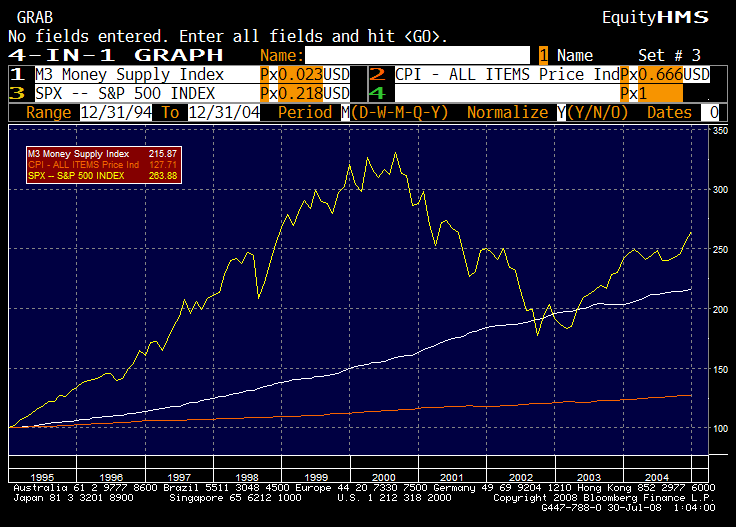
(Note: the S&P 500 would look much more impressive if dividends were included.)? I’m not crazy about the way the CPI is calculated, for reasons listed in this article.? But there is a reason behind the lack of goods price inflation for that era.? The money wasn’t going into goods, it was going into assets, like stocks, bonds, venture capital, homes, etc.? There were too many dollars chasing too few assets.? Asset values inflated in the 80s and early 90s, leading to the “lost decade” 1998-2008, where the market went nowhere.
Part of that problem is that the ratio of savers to consumers was topping out 1998-2008, and the Baby Boomers as a whole were a lazy cohort with respect to saving money.
That’s the prologue, my real puzzle is similar to what I posited above.? Dick Cheney has reportedly said, “Reagan proved that deficits don’t matter.”? Well, Reagan had the luxury of running the largest peacetime deficits we have seen, but at least it eventually bore the fruit of the “peace dividend,” that Clinton got to harvest.
I can see some leading officials at the Treasury having dinner together, and they about the budget deficit, and they say this: “How much money can we borrow from abroad?? We keep running larger and larger deficits, and the foreigners keep taking the paper down even as the US Dollar falls. That is great for us politically, because export industries get stimulated, and no one cares about imports (buy American), except crude oil.? There don’t seem to be any limits here.? What a great boon it is to be the world’s reserve currency!”
Yes, it is good to be King.? But, kings topple when they cannot control the amount they extract from their subjects.? I wrote a piece for RealMoney on how central banks would diversify out of the Dollar.? My main point was that those with the least to lose would do so first, and those with the most to lose would do so last.? I commented that diversification out of the Dollar would be “Led by smaller central banks, such as Singapore, Russia, or India.”
Well, India revalued the Rupee up since then, and Russia has diversified away from Dollars.? Singapore?? Their Dollar has had a significant rally against the US Dollar.
But other revaluations have not occurred yet.? The Gulf states, except Kuwait, have maintained their Dollar peg.? China is running a dirty crawling peg, rather than revalue its currency upward by 20%.
As a result, there has been no discipline, no constraint to the level of borrowing by the US Government.? They will borrow even more in future years.? Is there a time where they will find a lack of willingness of lend in Dollars to the US Government and other Dollar-denominated debt and force US interest rates up?? I think so, and it will happen by the time the demographic wave crests around 2015, give or take a few years.? At that point, future dissaving will overwhelm asset markets, as they anticipate the cash needs of the Baby Boomers as they retire.
Inflation is returning to the US, and will return in greater measure when foreign central banks diversify away from the US Dollar.? Until then, they will import inflation from the US, as they send us goods, and we send them paper.
Our position is precarious, and makes us reliant on the kindness of strangers, who might for economic or political reasons decide that the Dollar is not worth investing in.? Like any writedown, they would admit the loss that they knew was there, and move on.
In the long run, that is why I think the path of the Dollar is down, even though I think it could rally in the short run.? We are absorbing too much of the world’s goods and providing too little in return.
David, You have talked about inflation concerns for some time but I don’t recall you ever buying gold. Do you like gold? But my bigger question is how should a portfolio be structured in a period a rising inflation?