I have a quirky indicator called A2P2T2. It?s the yield on the Two-year Treasury minus the yield on A2/P2 commercial paper. Both are sensitive to credit confidence issues in the economy. When times are bad, the two-year yield falls, anticipating looser Fed policy. A2/P2 commercial paper is short-term unsecured promises to pay issued by corporations rated between A3/A- and Baa2/BBB. These are investment grade firms that are large or medium-sized, tending to the lower end of investment grade. When times are bad, the yields for A2/P2 commercial paper rise, because we are less willing to lend on an unsecured basis to borderline investment grade companies.
So, the difference between the two measures can indicate real stress.? Take a look at this graph over the last twelve years:
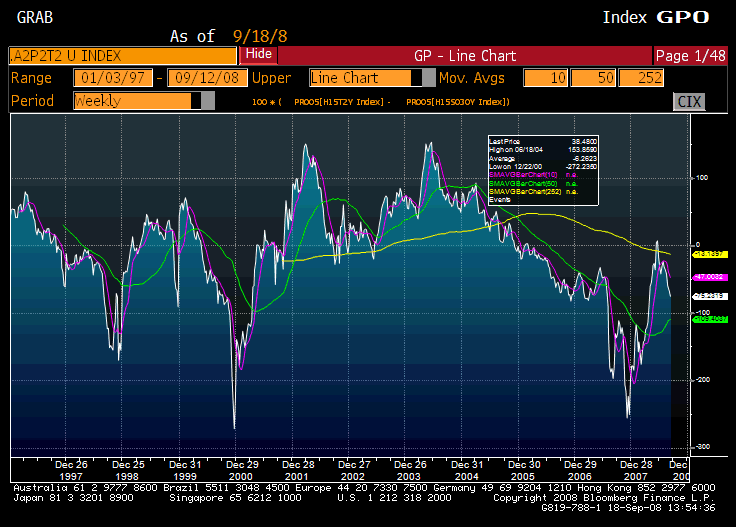
You can see the panics around LTCM (1998), the end of the tightening cycle in 2000, and the money market troubles in 2007.? On average, though, the two-year Treasury and A2/P2 commercial paper yield about the same.? That helps to define what a normal environment looks like, but we are nowhere near normal now.
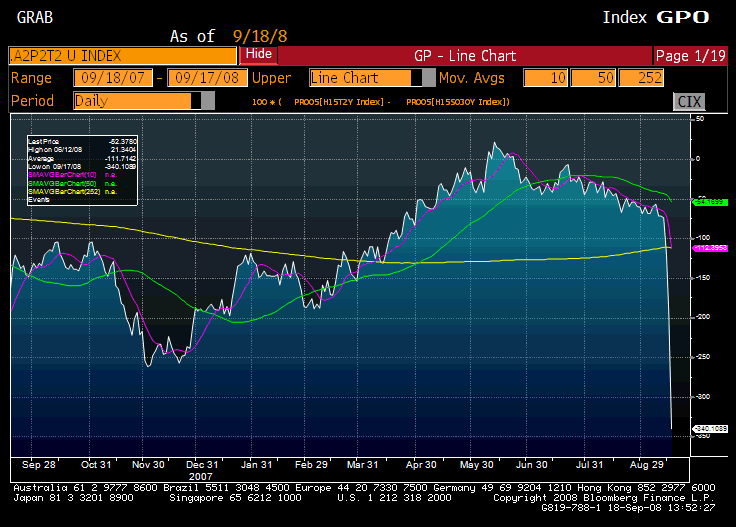
This is the daily graph as of yesterday, hitting an all-time low for this series.? The series closed above the low levels, but is still below -300 basis points, and considerably worse than the panic in late 2007.
Conclusion
With all of the hoopla this morning about central banks acting to stem the current crisis, I don’t see how their policies are effective at all.? Yes, the government and high quality borrowers can get funds, but middling borrowers are squeezed, and bad borrowers are shut out.
The short term lending markets are in a panic, and most of the programs that the Fed put into place have failed, as of now.? Al McGuire, past coach of Marquette Basketball was once asked (something like), “Would you rather have an “A” student or a “C” student at the free throw line in a tense situation?”? His answer was the “C” student, because he wouldn’t think about the situation, he would just act, and sink the free throws.
The current Fed is clever.? Too clever by half.? Their policies have not added to the problems in the short-term lending markets, but neither have they helped, and they leave the Fed with a messier balance sheet than they have had for most of its history.
Does this make me worry?? Yes, somewhat.? We are facing the distinct possibility that the Fed will lose what little control they have over the short-term lending markets, and we haven’t even factored in the possibility of OPEC and China breaking their dollar pegs.? My advice: keep your duration short, and guard against inflation risk.? If you want a hedge against deflation, buy some long zeroes or long TIPS.? I prefer the latter.
What do you make of the govt severely limiting the purchase of I-Savings bonds (after emaculating them last reset) and making noises about reducing issuance of TIPS going forward?
To me it sounds like they are setting the table for seriously higher inflation/interest rates…
David,
What do you think of TBT as a dollar hedge?
Mr. Merkel:
I’m just curious why you use 2 Year Note minus A2P2 instead of A2P2 less AA Nonfinancial CP? To me, it makes more sense to compare similar maturities. Clearly, they would show the same thing in this instance. I’m just curious; not trying to pick apart your method.
PS: I’ve been a small position in long TIPS all year because of the duration.