

The Complete Guide To Option Pricing Formulas, and Derivatives, Models on Models (II)
One of my commenters wrote in response to my piece Book Reviews: The Complete Guide To Option Pricing Formulas, and Derivatives, Models on Models:
Kurt, I’ve met Mandelbrot, and have discussed these issues with him.? The two books that I recommended are also up on those issues.? Implied volatility estimates as applied to option pricing formulas are a fall-out.? No one thinks they are true, but they are a paramater used to keep relationships stable across options of similar expirations.
Intelligent hedgers hedge options with options; they don’t try to apply the theoretical equivalence that lies behind the traditional Black-Scholes formula and do dynamic hedging with the common stock itself.? That is the philosophy behind the books that I reviewed.
I’m on your page, Kurt.? Variance is infinite, and B-S blows up.? But within the options world, there has to be a way of calculating relative value, and these books aid us in that calculation.
If you think I am wrong here, go to your local library, and get these books via Interlibrary loan.? Read them, and you will see that we are all in agreement.
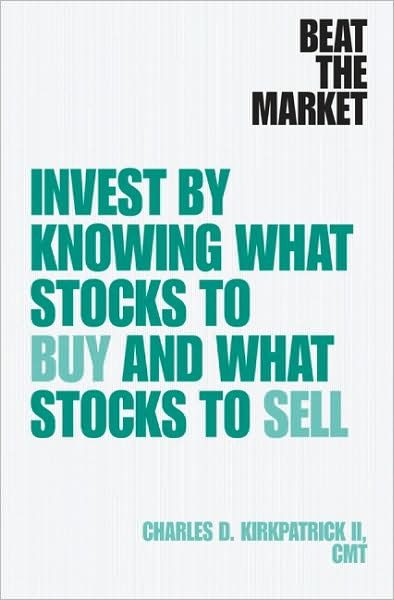 I am usually not crazy about books that propound a simple way to beat the market.? This is one of those books.? What makes me willing to write a review about this book, is that the writer, Charles Kirkpatrick is willing to incorporate some fundamental measures into his analyses, notably price-to-sales, which will help with industrial companies, but not with financials.
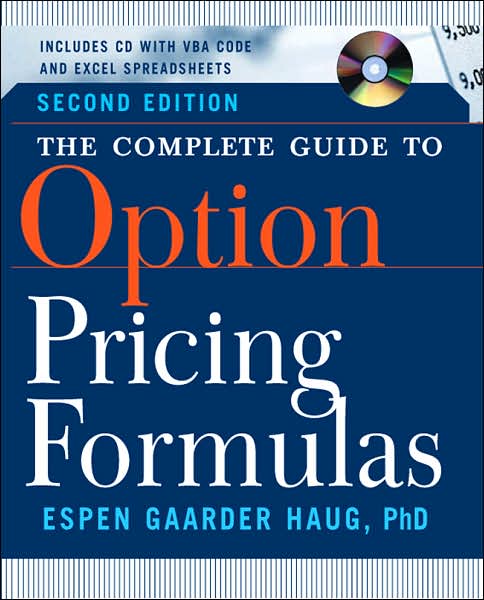 This is not my ordinary book review.? These are good books that will only appeal to a small fraction of my readers, because few will have need for the knowledge. Both are written by Espen Gaarder Haug, who is kind of a character.? He collects option pricing formulas the way some people collect Barbie Dolls, Beanie Babies, or Baseball Cards.? He has interacted with some of the brightest minds in the field, and collaborated with a few of them.? In both books the math is significant — it would help if your calculus was sharp, and for any value some algebraic knowledge is needed.
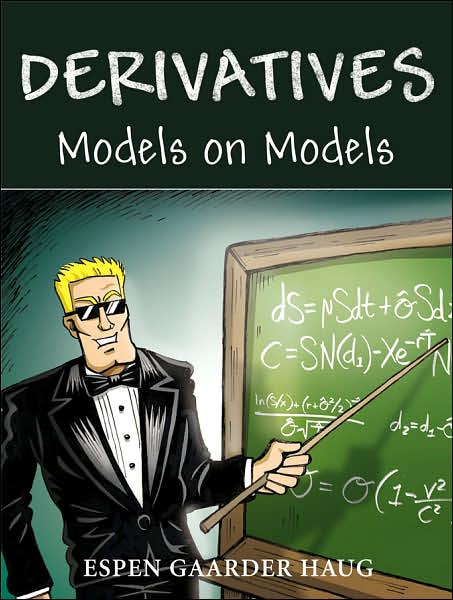 The second book Derivatives, Models on Models, is different.? He interviews 15 significant thinkers on options and derivatives, and presents 15 papers by them.? Most of them contain tough math; some I couldn’t understand.? The real value of the book was in the interviews, where many of the interviewees showed significant knowledge of the limitations of their models, and how derivatives were misunderstood by the public, or by their users.

December 13th, 20085:05 pm at EditDavid:
How can advocate people using these models which clearly don?t work? Estimating volatility is a suckers bet. Even if you could estimate the underlying ?actual? volatility with 100% accuracy there would be sample error in your realized volatility. And of course the volatility isn?t just changing, the fundamentals of the underlying are changing.
I once heard of a man named Mandelbrot who said volatility was infinite, in which case these sigmas and lemmas are a bit beside the point, no?