
Longtime readers know that my investing interests are broad.? I almost decided to name this blog, “The Investment Omnivore,” but took the name of the investment fund that I deeply considered creating in the 90s, and used that.
So, when notable things happen, I tend to switch to where the action is.? On a day like today, that means the high quality, long duration band markets, because they are falling dramatically.? Now, there are other high quality observers following this phenomenon, including:
- The Big Picture Rising Interest Rates Finally Start to Matter
- Accrued Interest Yeah but this time I’ve got the money!
- and the always excellent Across the Curve, no specific post, because he said a lot of good things on Wednesday.
Let me give you my perspective. Big moves in Treasury, Interest Rate Swap, and Mortgage rates tend to persist.? Why?? Three reasons:
- Mortgage originators hedge their pipelines.? As rates rise/fall, they receive floating/pay fixed in order to lower their exposure to changes in interest rates.? As mortgage rates rise, mortgages get longer, because fewer people refinance.? Vice-versa for when mortgage rates fall.? Receiving a short rate like LIBOR, and paying fixed rates makes money when LIBOR rates are rising, which hedges those originating mortgages.
- Those managing mortgage bond portfolios against a benchmark find themselves in the same situation.? As mortgage rates rise, mortgage bonds get longer versus their benchmark, and managers sell longer assets in order to adjust, sending the yields on longer-dated assets higher.
- Speculators pile on when they sense that the first two factors are in play.
That’s why big moves in Treasury, Interest Rate Swap, and Mortgage rates tend to persist.? Thus for those who trade those markets, it is best to stand aside, or follow during big moves, and let the momentum run.
Wednesday we experienced what I would call a phase change, where the losses in the bond market since its apex in mid-to-late December have been consolidated.? Consider this graph of the yield curve as it has progressed over the last five months:

Short end stays firm because of confidence that the FOMC is on hold.? Long end runs because of new high borrowing needs of the US government, both recent and future issues.
Now what is this doing to the mortgage market?
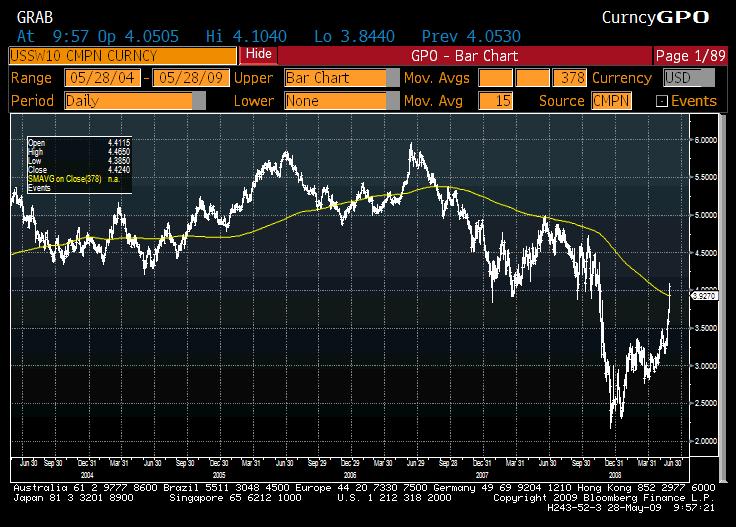
That’s a graph of 10-year swap yields, which correlate closely (under ordinary circumstances) with 30-year mortgage yields.? The yellow line is the 18-month trailing moving average.? When rates are above that level, refinancing tends to slow; when rates are below that level, refinancing tends to speed up.
So how is the move in the yield curve affecting mortgage rates?
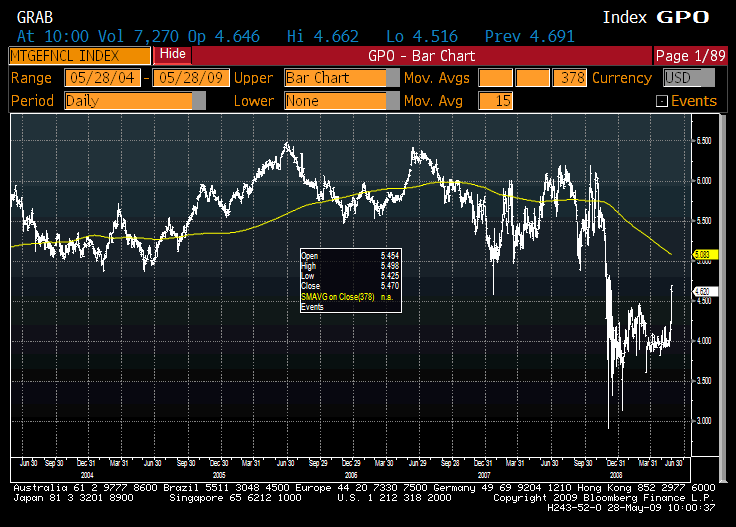
Rates have gone up considerably, but with the government interventions in the bank lending and residential mortgage markets, ordinarily stable market relationships got out of kilter.? This graph has the difference between 10-year swap yields and Fannie 30-year mortgage yields:
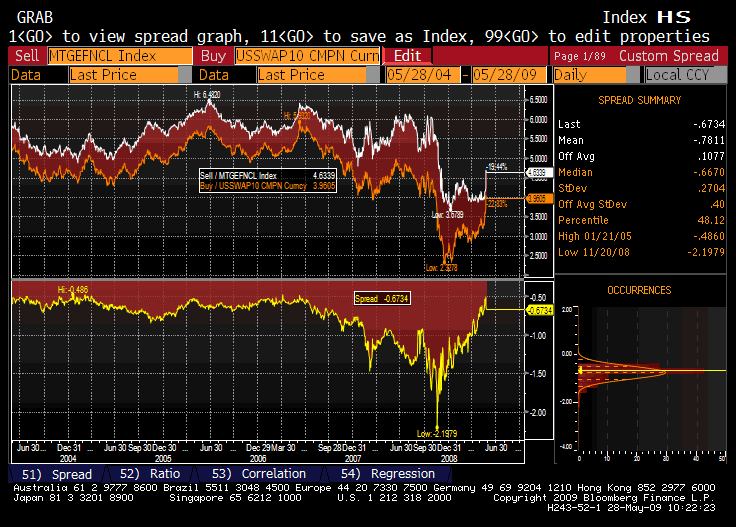
An ordinarily stable showed a lot of stress from the end of 2007 until now.? Present levels are close to “normal” over the the life of the series over the past 20 years where excluding the stress period, the difference was typically 0.60%, and we are at 0.67% now.
One more graph.? What period in the recent past is the current yield curve shaped like?? September 2003.
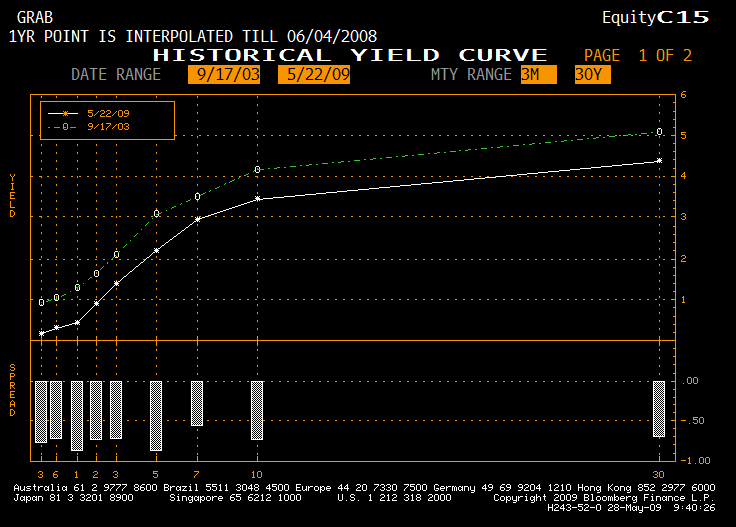
What was the economy like in September 2003?? Accelerating growth with little goods price inflation — it would be neat if that were the scenario ahead.? What is different this time is that the banks still have problems to work through, not the least of which are losses from commercial real estate lending.
Summary
- What a rapid move in the long end yield curve over the past five months, with most of the moves concentrated in January and May.
- This move may go further, but not much further, because we are at historic levels of steepness for the yield curve.
- Refinancing opportunities should dry up.
- The Fed would have to do a lot in order to bring mortgage rates lower versus swaps because we are close to the normal relationship of swaps versus mortgage yields.
- The yield curve is very steep, which usually foreshadows rapid growth in the economy, but we have issues in the financial system that may resist that stimulus.? Liquidity in private hands is tight, so opportunities to make money borrowing short and lending long are limited.