
The idea of a carry trade is simple.? Borrow inexpensively, and invest at a higher yield.? Make money.
Too easy you say?? Right.? Usually something has to be compromised for a carry trade to work, usually betting on lower rated credits performing, or currencies not moving against those borrowing in a low interest rate currency, and investing in a high interest rate currency.? Or, borrow short and lend long when the yield curve is steep, hoping the situation will correct with the long yield coming down, rather than a 1994 scenario, where short rates outrace long rates higher.
Carry trades blow up during times of high volatility, which typically have high yield bonds or countries seeming to be more risky than usual. Carry trades return when times are quiet, allowing placidity to clip yield.? As the WSJ has commented, that time is now, and the carry trade has returned.
I’m going to use the Japanese Yen as my example here.? Because of the chronically low interest rates there, it is a favorite currency for borrowing, and using the money to invest in higher yielding currencies.
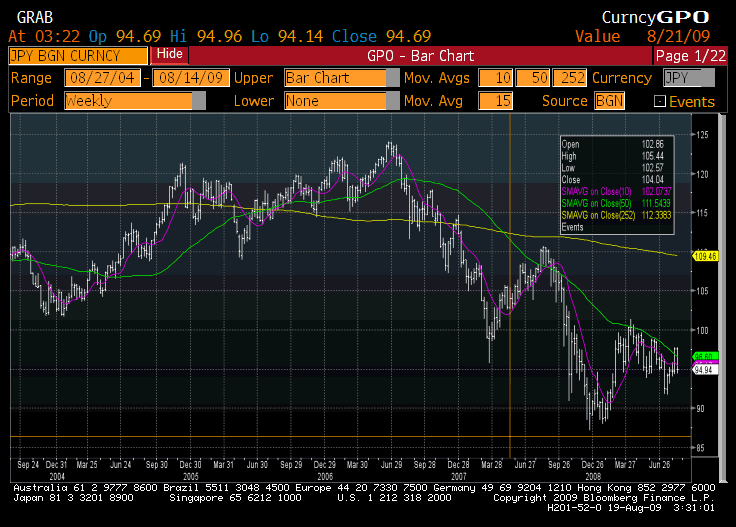
That’s the yen over the last five years.? Wish I could have gotten option implied volatility over the same period, but I got nearly the last two years here, by using the CurrencyShares Yen ETF:
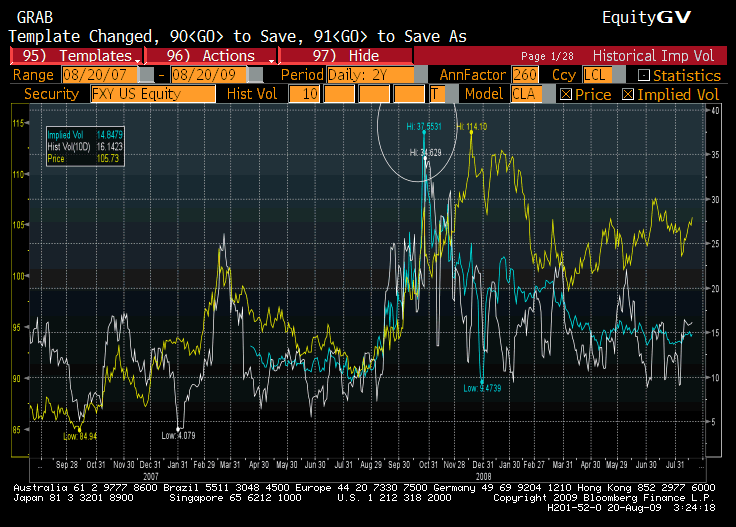
You can see how option implied volatility peaked in late October of 2008.? At that time, with the strength of the yen, which would not crest until mid-December, there was a rush to buy protection against the rising yen, because those with carry trades on were losing money, and wanted to get out.? Momentum carried the yen for another six weeks.
After significant fury, the implied volatility settled out at a baseline level, and the carry trade returns because conditions are more placid.? Implied volatility and the currency have stabilized for now.
As another example. consider this:
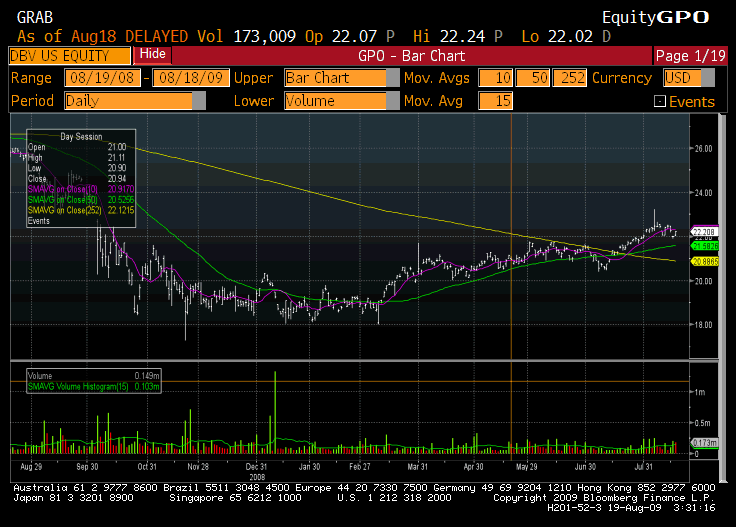
The Powershares DB G10 Currency Harvest Fund [DBV] borrows in the three lowest yielding currencies of the ten countries that it tracks, and invests in the three highest yielding.? This is the perpetual carry trade fund.
Note the plunge into October/November 2008.? High yield currencies were getting killed, and low yield currencies were rallying.? Since then, the performance of DBV has improved.? Why?? The currencies are more placid, so clipping excess yield makes sense to some in the short-run.
And so it will be until the next big implied volatility explosion occurs.? Carry trades don’t offer significant profits across a full cycle, but can profit those who time it right, few as those people are, and matched by those who lose.
-=-==–==-=–=-=-=-=-==-
PS — Sorry for not writing about commercial mortgages, as I said I would.? I will get to it soon, but I have been hindered by personal issues.