
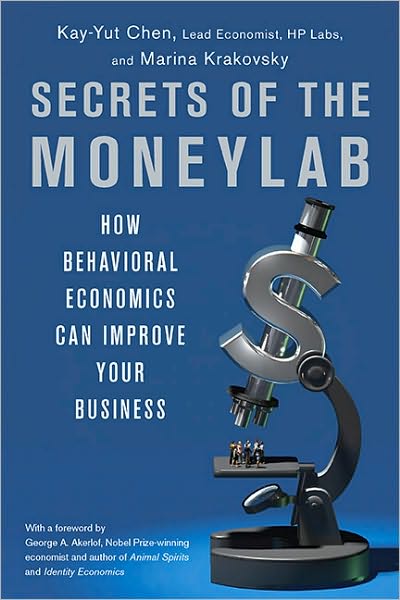
Behavioral economics is hot among investors, particularly value investors.? But the real advantage of behavioral economics is probably not to investors, but to businessmen setting their pricing, because men do not look to maximize utility, but rather to do good enough, and get a better deal than peers.? Men don’t think absolutely, but rather relatively.? Homo Oeconomicus does not exist.
People will refuse unfair allocations in a deal, even if it makes them better off on average.? There is a sense of fairness in all that people do, exceeding the need for personal gain, except when times are tough.
Machiavelli said, “It is better to be feared than be loved.” ?I have found it is better to be loved than feared.? I have worked in businesses where fear was significant, and I found that treating people with love and fairness created far more value than fear.
This is another case where doing what is good leads to more profits not only in long run, but even in the short run.
Play games with people offering them wages in short-term that are high, and yes, you will get more productivity from them, but businesses exist not just for the moment, but for the long-term.? Motivating people in the long run is a lot more difficult.? The weakness of this book is focusing on short term experiments, and assuming that they apply to the long run challenges of business.
Reputation is important in business and in life.? Unlike other aspects of business, you can’t diversify reputation.? You only get one.? People are far more willing to do business with someone that has a good reputation than one who does not. A related concept is trust.? People are far more willing to take chances with those that they trust.
Beyond that, when businesses have odd promotions, they should not be surprised if someone finds a hole in the rules and takes advantage of it.
There is wisdom in experts, and wisdom in crowds, but when do you take advantage of each group to maximum advantage?
Overall, I enjoyed the book and think that those who have not visited these concepts would benefit.? Those with more of an investing mindset would probably benefit more from the book Priceless.
Quibbles
Most of my troubles with the book are expressed above.? It is great that HP employed people to analyze trading behavior.? The mistake is applying the results to long term business decisions.
Who would benefit from this book:
If you want to understand how pricing decisions can improve your business, this book could help you.? Value investors, I am sorry, no, this is not the book for you. If you are looking for an entertaining book on how economics really works on the micro level, you would like this book.
If you want to, you can buy it here: Secrets of the Moneylab: How Behavioral Economics Can Improve Your Business.
Full disclosure: I was e-mailed a copy of the book without asking for it.
If you enter Amazon through my site, and you buy anything, I get a small commission.? This is my main source of blog revenue.? I prefer this to a ?tip jar? because I want you to get something you want, rather than merely giving me a tip.? Book reviews take time, particularly with the reading, which most book reviewers don?t do in full, and I typically do. (When I don?t, I mention that I scanned the book.? Also, I never use the data that the PR flacks send out.)
Most people buying at Amazon do not enter via a referring website.? Thus Amazon builds an extra 1-3% into the prices to all buyers to compensate for the commissions given to the minority that come through referring sites.? Whether you buy at Amazon directly or enter via my site, your prices don?t change.