

On the Usefulness of Yield Spreads
When I was a risk manager and bond manager for a life insurance company (at the same time, dangerous, but great if done right) I had to have models that drove yields on corporates from Treasury yields.? Initially, I found that I had just eight years of yield data from Bloomberg.? That didn’t seem right, so I went to my boss,? who said, “Call our coverage at Bear and Merrill.? Ask to talk to the “Historian.”? Bear and Merrill are likely to have the longest data series.
So I went and called them and they handed me off to a researcher who had been working with bonds a long time.? The response was, “Computers changed everything.? No one thought in terms of spreads until computing power was cheap enough to calculate spreads.? Assuming that we kept the bond trading data, you probably would have seen prices in dollars as late as the mid-1980s.? No yields.? No spreads.? And the truth is we don’t do a good job of preserving the past.”
This explained why my boss had this antiquated bond calculator at his desk.? Every now and then he would use it.? Me?? I would use Bloomberg, or a model that I built myself.
Ugh.? Okay, so no data.? 96 months will have to do it.? As it was, I noticed that the highest quality bonds had the tightest relationships with Treasury yields, but by the time you got down to single-B bonds, the relationship was tenuous at best.? Betas versus Treasury yields declined with credit quality, as did the goodness-of-fit (R-squared).
Another incident seemed unrelated at the time, but today seems very related — one day I asked the high yield manager what sorts of spreads he looked for in buying bonds.? He told me that he did not trade on the basis of spreads — high yield bonds were quoted in dollar terms.? Spreads were just a fallout, though he added that yield was more important to high yield bonds than spread, particularly in a low interest rate environment — he said that there was a risk to high yield bonds that went beyond the spread.? High yield bonds are risky enough that when nominal yields get low enough, it is probably time to start reducing exposure.
Now, we don’t have any significant data series on high yield bonds.? But we do have one on BBB bonds.? Oh, sorry, we have to speak Moody’s here — Baa bonds.? And, we have the same series on Aaa bonds, available at FRED.
The data series go all the way back to 1919 on a monthly basis, and back to 1986 on a daily basis.? The yields are comprised of noncallable bonds 20-30 years in maturity.? Moody’s did the calculations, and we are all the better off for it.
Now, anyone that does work on the Treasury yield curve knows that the US government made life tough when they withdrew the 30-year back in 2001.? As an aside, when the US government did that, there was a huge grab for yield on the long end.? I sold into it, realizing that the Bush Administration would be offering a lot more debt than the omission of the 30 would eliminate.? I bought much of it back 6 months later for gains.
Both the 20-year and 30-year yield series are incomplete.? That said, Treasury yield curve shapes are pretty limited.? If you have four points on the curve, you can estimate the rest with 99%+ R-squareds.? I created pseudo-data for the gaps in the 20- and 30-year yield series.
I needed both series, because the 30-year series went back to the mid-1970s on a daily basis, and the 20-year series went back to 1953 on a monthly basis.
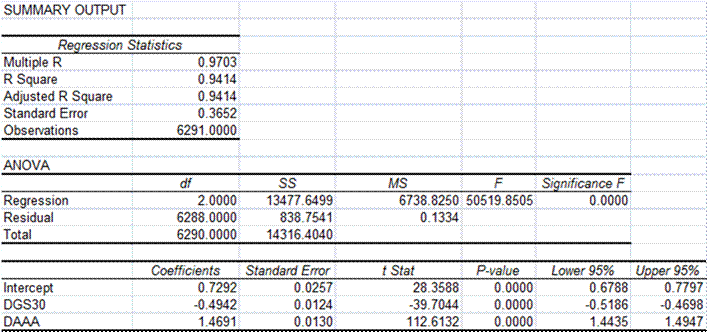
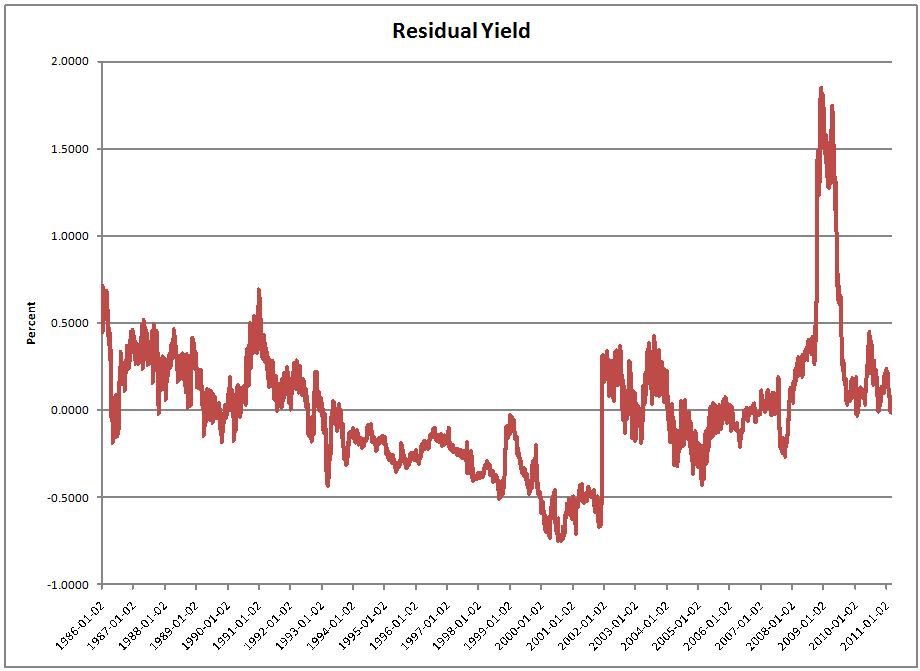
Anyway here is what I learned when I ran my two regressions:
And then the monthly calculations:
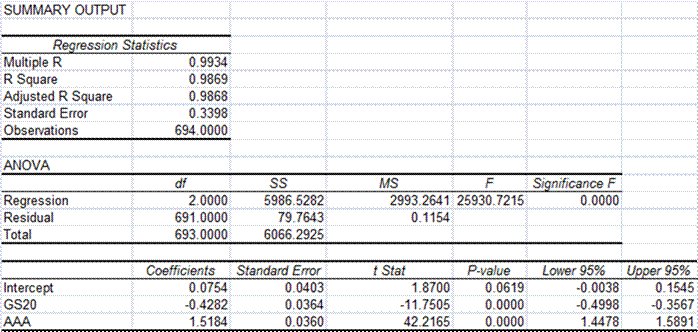
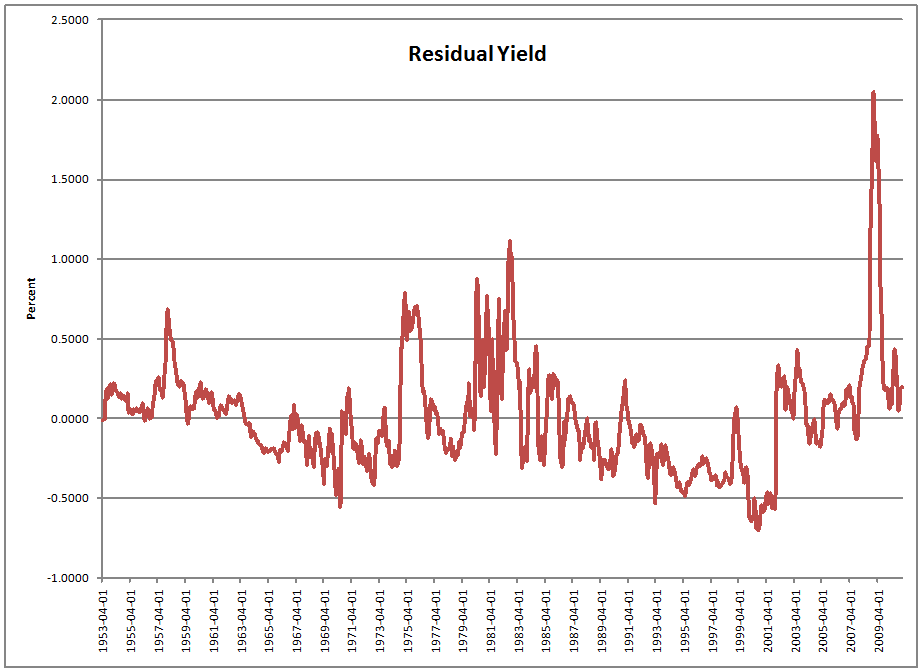
I take some heart that the beta coefficients are very similar, and the residuals are as well.? R-squareds are very high as well.? So what does this tell us?
- There is a credit factor that effects yields, and the effect on Baa bonds is roughly 1.5x that of Aaa bonds.
- As Treasury yields get lower, Baa bond yields rise at roughly 45% of the rate.? There is the nominal yield need — even Baa bonds tend to need a certain nominal yield, particularly for 20+ year bonds.
- Present yield levels are fair for long Baa bonds, to the extent that Moody’s measures them accurately.
Unlike beta calculations, this estimate is consistent across monthly and daily observations.? We can have some confidence here.? Thus I would say be near the benchmark in terms of credit exposure.? And remember, spreads are not the most useful way to think about yields.