
In 2003 a financial gun was put to my head, telling me to relocate or be severed.? I took severance because of all the ties my family had to the area.? I landed at a hedge fund near me, one well enough run to be immune to the criticisms of this book.
The first thing you have to understand is that corporate form is not a factor in performance.? It does not matter whether you manage a mutual fund, unit investment trust, hedge fund — what matters are your ideas, not the legal form you inhabit.
But, some of the problems with hedge funds, as a opposed to open-end mutual funds, is that:
1) Many hedge funds go out of business, and as they do, their bad performance is not recorded, and sometimes lost.
2) Hedge funds with good performance give the databases their early performance.? Bad early performance does not get reported.
3) The activity of investors chasing trends is more pronounced in hedge funds than in mutual funds, with a loss of returns of 5% in hedge funds, versus 3% in mutual funds.? This is all due to greater volatility.
4) Double alpha is generally not achievable, because most managers good at longs are not good at shorts, and vice-versa.? Going long and short are different skill sets.
The Author has a lot of experience with hedge funds, having invested with them for many years.? He knows the foibles, the pitfalls, and most of the factors that lead to subpar results.? Above all, he understands that there is no magic to hedge funds.? Just because you call you investment fund a hedge fund does not mean you will deliver market-beating results.
Aside from the book some of the works the book cites are valuable, particularly the work by Dichev and Yu, which deals with how hedge funds do well when they are small and do badly when they are big.? Trend chasing always leads to bad results, and institutional investors are not immune.
Quibbles
None.
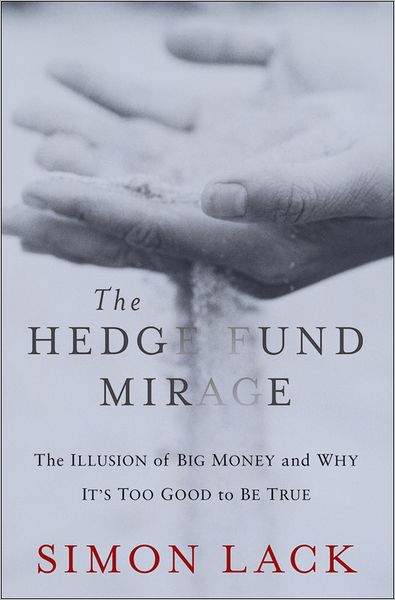
Who would benefit from this book: Most investors would benefit from this book.? Particularly those that advise institutional clients and high net worth individuals would benefit. If you want to, you can buy it here: The Hedge Fund Mirage: The Illusion of Big Money and Why It’s Too Good to Be True.
Full disclosure: The publisher asked if I wanted the book.? I said ?yes? and he sent it to me.
If you enter Amazon through my site, and you buy anything, I get a small commission.? This is my main source of blog revenue.? I prefer this to a ?tip jar? because I want you to get something you want, rather than merely giving me a tip.? Book reviews take time, particularly with the reading, which most book reviewers don?t do in full, and I typically do. (When I don?t, I mention that I scanned the book.? Also, I never use the data that the PR flacks send out.)
Most people buying at Amazon do not enter via a referring website.? Thus Amazon builds an extra 1-3% into the prices to all buyers to compensate for the commissions given to the minority that come through referring sites.? Whether you buy at Amazon directly or enter via my site, your prices don?t change.
3 thoughts on “Book Review: The Hedge Fund Mirage”
Comments are closed.