
Archive for April 24th, 2012

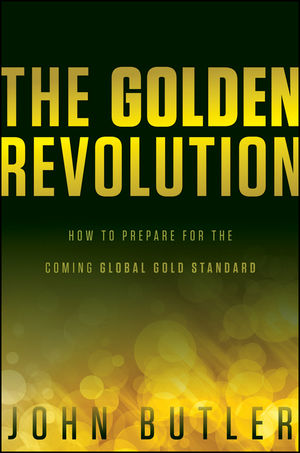
Book Review: The Golden Revolution
Tuesday, April 24th, 2012

This book is highly optimistic that we will restore a gold standard to our world.  Much as I would like it, because it restrains the power of governments that increasingly behave like thugs, I don’t think a gold standard is likely to replace the status quo.

The book has many good areas to commend it, where it deals with history, explaining the problems of the past.  It trashes the concept of the SDR of the IMF, it is the Euro on an even weaker footing.

But the book is weak, because it does not recognize that the standard for money and the regulation of banks are separate issues.  Merely instituting a gold standard will not bring stability.  One must regulate heavily the degree that banks borrow short and lend long.  We had many crises during the gold standard in the 19th century, none as bad as the Great Depression, but they all stemmed from a lack of bank regulation.  I have no sympathy for the concept of “free banking.”  Anyone that is making a large number of promises needs to be regulated; he is a systemic risk.

Chapter seven is the critical chapter of the book, and it fails because it doesn’t go far enough.  In the chapter, Russia adopts a gold standard, and requires payment in gold for exports.  Fair enough, but as other nations attempt to adopt a gold standard, they would find their exporters objecting, leading to no adoption of a gold standard.

Chapter seven is the only thing that makes this book unique, and it is why I requested it from the publisher.  That makes this book a “fail.”

On the bright side, I now know that a gold standard would be difficult to appear, unless hyperinflation drove people to a commodity standard.  (And the odds of that are better than 20% over the next 20 years.

Quibbles

I do not recommend this book.

Who would benefit from this book: No one.  If you want to, you can buy the book here: The Golden Revolution: How to Prepare for the Coming Global Gold Standard.

Full disclosure: I asked the publisher for the book and he sent it to me.

If you enter Amazon through my site, and you buy anything, I get a small commission.  This is my main source of blog revenue.  I prefer this to a “tip jar” because I want you to get something you want, rather than merely giving me a tip.  Book reviews take time, particularly with the reading, which most book reviewers don’t do in full, and I typically do. (When I don’t, I mention that I scanned the book.  Also, I never use the data that the PR flacks send out.)

Most people buying at Amazon do not enter via a referring website.  Thus Amazon builds an extra 1-3% into the prices to all buyers to compensate for the commissions given to the minority that come through referring sites.  Whether you buy at Amazon directly or enter via my site, your prices don’t change.


Book Review: The Facebook IPO Primer

Tuesday, April 24th, 2012

There is more money to be lost than made in most controversial IPOs, on average. Don’t get me wrong, this is a good book, and the author knows what she is talking about, but whether one should buy Facebook in its IPO next month is a huge open question, and I would encourage you to read this book to think through the problem.

If you read the book, you will get a healthy dose of skepticism, mixed with the idea that many large IPOs in tech have been successful, like Google.  The main idea is that you have to do due diligence.  All snowflakes have six corners, but they are all different.

The book gives you five different ways to value Facebook, and those methods are all over the map, as they should be for a company where the economics are yet to be determined.  At least it is profitable.

The range of valuation gives everyone something to hang onto, but the thought process should force everyone to think about how Facebook will monetize all of their users.  Will the users behave in a way that allows Facebook to make money off them?  So far, yes, but the future is far more volatile than I can imagine.

In general, I would advise readers to avoid IPOs.  Most people lose money in buying them on the secondary markets.  Better you should buy stock in less flashy businesses like utilities, insurance, and energy stocks.  You will make more money there — businesses with a high earnings yield tend to do better than other stocks, and Facebook does not make it there, for now.  Buying Facebook implies a company that will grow far more rapidly than most, and far a long time, which is not common.

If you are thinking about buying shares of Facebook, spend five bucks or so, and get this book.  It’s less than a brokerage commission, and worth more than most in educating you about the value of Facebook.

Quibbles

None; this is a good book.  What matters most is how you think about it.

Who would benefit from this book: If you want to buy the Facebook IPO, buy this book and learn something.  Be aware before you buy, or be dissuaded before you do nothing.  If you want to, you can buy the book here: The Facebook IPO Primer.

Full disclosure: The publisher asked if I wanted to read the book electronically.  I said “yes” and I downloaded it and read it.

If you enter Amazon through my site, and you buy anything, I get a small commission.  This is my main source of blog revenue.  I prefer this to a “tip jar” because I want you to get something you want, rather than merely giving me a tip.  Book reviews take time, particularly with the reading, which most book reviewers don’t do in full, and I typically do. (When I don’t, I mention that I scanned the book.  Also, I never use the data that the PR flacks send out.)

Most people buying at Amazon do not enter via a referring website.  Thus Amazon builds an extra 1-3% into the prices to all buyers to compensate for the commissions given to the minority that come through referring sites.  Whether you buy at Amazon directly or enter via my site, your prices don’t change.

Disclaimer


David Merkel is an investment professional, and like every investment professional, he makes mistakes. David encourages you to do your own independent "due diligence" on any idea that he talks about, because he could be wrong. Nothing written here, at RealMoney, Wall Street All-Stars, or anywhere else David may write is an invitation to buy or sell any particular security; at most, David is handing out educated guesses as to what the markets may do. David is fond of saying, "The markets always find a new way to make a fool out of you," and so he encourages caution in investing. Risk control wins the game in the long run, not bold moves. Even the best strategies of the past fail, sometimes spectacularly, when you least expect it. David is not immune to that, so please understand that any past success of his will be probably be followed by failures.


Also, though David runs Aleph Investments, LLC, this blog is not a part of that business. This blog exists to educate investors, and give something back. It is not intended as advertisement for Aleph Investments; David is not soliciting business through it. When David, or a client of David's has an interest in a security mentioned, full disclosure will be given, as has been past practice for all that David does on the web. Disclosure is the breakfast of champions.


Additionally, David may occasionally write about accounting, actuarial, insurance, and tax topics, but nothing written here, at RealMoney, or anywhere else is meant to be formal "advice" in those areas. Consult a reputable professional in those areas to get personal, tailored advice that meets the specialized needs that David can have no knowledge of.

 Subscribe in a reader

 Subscribe in a reader (comments)

Subscribe to RSS Feed

Enter your Email


Preview | Powered by FeedBlitz

Seeking Alpha Certified

Top markets blogs award

The Aleph Blog

Top markets blogs

InstantBull.com: Bull, Boards & Blogs

Blog Directory - Blogged

IStockAnalyst

Benzinga.com supporter

All Economists Contributor

Business Finance Blogs
OnToplist is optimized by SEO
Add blog to our blog directory.

Page optimized by WP Minify WordPress Plugin