Here’s the second half of my most recent interview with Erin Ade at RT Boom/Bust. [First half located here.] We discussed:
Stock buybacks, particularly the buyback that GM is doing
Valuations of the stock market and bonds
Effect of the strong dollar on corporate earnings in the US
Effect of lower crude oil prices on capital spending
Investing in Europe, good or bad?
Seven minutes roar by when you are on video, and though taped, there is only one shot, so you have to get it right. ?On the whole, I felt the questions were good, and I was able to give reasonable answers. ?One nice thing about Erin, she doesn’t interrupt you, and she allows for a few rabbit trails.
I’ve generally been quiet about Bitcoin. ?Most of that is because it is a “cult” item. ?It tends to have defenders and detractors, and not a lot of people with a strong opinion who are in-between. ?There’s no reward for taking on something that has significance bordering on religious for some… even if it proves to be a bit of a “false god.”
I view Bitcoin as a method of payment, a collectible item, a commodity that is not fully fungible, and not a store of value. ?It is not a currency, and never will be, unless a government takes it over and adopts it.
In order for a tradable item to be a store of value, the amount of variation in value in the short- to intermediate-term versus other items that has to be limited. ?If there are other tradable items with greater stability toward the other items, those tradable items would be better stores of value. ?Thus Bitcoin is inferior as a store of value versus the US Dollar, the Euro, the Yen, etc. ?It is far more volatile versus goods and assets that one might want to buy, and goods and liabilities that one might want to fund.
Now as an aside, the same thing happens in hyperinflationary economies. ?Merchants have to change their prices frequently, because the currency is weak. ?Often another currency will begin to replace the weak local currency, like the US Dollar or the Euro, even if that is not legal.
Fungibility implies that any Bitcoin is as good as any other Bitcoin. ?But with failures like Mt. Gox, a Bitcoin exchange that had Bitcoins under its care stolen from it, a Bitcoin under the care of Mt. Gox was not as valuable as one elsewhere. ?(Another aside: that happened in a minor way with the Euro when Euros in Cypriot banks were forced to have a “haircut,” while Euros elsewhere were unaffected.)
Bitcoin is a means of payment, a way of transferring value from one place/person to another. ?It seems Bitcoins move well, but they are less good at being safely stored.
The theft of Bitcoins points out the need for there to be a legal system to protect property rights. ?Licit participants in Bitcoins as a group have not been adequate to assure that the rightful owners might not lose them as the result of computer hacking. ?Contrast that with the protections that credit card holders have when false transactions are applied against credit card accounts. ?The credit card companies eat the losses, funded by profits from interest charged an interchange fees.
The libertarian vision of a currency that does not require a court, a government to protect it is misguided. ?Where there are thieves, there is a need for courts to try cases of theft, and deal with questions of equity if theft leads to an insolvency.
Now, governments can be less than fair with their own judicial systems. ?I think of Dennis Kozlowski, formerly CEO of Tyco, who was barred from using his own money in self-defense when the US Government brought him to trial. ?Much as you might like to have value protected from the clutches of the government, that is easier said than done, and there are thieves that will pick away at those who?get value away from governments, because ultimately in an interconnected world, you have to trust other people at some points, and trust can be violated as much as the rights of a citizen can be violated. ?Repeat after me: THERE IS NO PERFECTLY SAFE PLACE ON EARTH TO STORE VALUE! ?That said, though, there are safer places than others, and so you have to live with the risks that you understand, and are prepared to take.
If you think that Bitcoin fits that bill, well, knock your socks off. ?Have at it. ?I will stick with US Dollars in banks, money market funds, bonds, and public and private stocks. ?Maybe I will even buy some gold that does nothing, just for the sake of diversification. ?But ultimately my store of value is in the bank of Heaven, as it says in Matthew 6:19-21:
“Do not lay up for yourselves treasures on earth, where moth and rust destroy and where thieves break in and steal;but lay up for yourselves treasures in heaven, where neither moth nor rust destroys and where thieves do not break in and steal.For where your treasure is, there your heart will be also.”
There is no perfect security on Earth, try as hard as you like. ?Bitcoins may keep value away from the government under some conditions, but who will protect your property rights in Bitcoins in the event of theft? ?You can’t have it both ways, so Bitcoins as property would?either be taxed and regulated by governments, or be totally underground, which would diminish utility considerably.
One final note: Bitcoins can’t be used of themselves to produce something else. ?They are a fiat currency, and only has value to the degree that users place on it. ?I liken it to penny stocks, where traders can bounce the price around, because there is nothing to tether the price to. ?At least with gold, you have jewelers demanding it to turn it into jewelry, and a broader pool of people who are somewhat less jumpy about what the proper exchange rate between gold and dollars should be.
But, gold can be stolen… again, no Earthly store of value is perfect. ?All for now.
Photo Credit: Storm Crypt || Trusting the Swiss National Bank, Really?
Significant currency brokers relied on the Swiss National Bank to keep its currency peg in place. Now some of them are insolvent, and many of their clients also. Should they be surprised? Currency pegs put into place for political reasons rarely hold up, and this has happened in Switzerland in the past.
On thing I learned early in my career is that you never bet the firm. You never allow there to be a single point where a change brings failure.
You don’t rely on the kindness of strangers. In markets, always ask “What are the motives of the other players?” As an example, think of all of the people who lost money on auction rate preferred securities. There was no guarantee that auctions would always succeed, or that if one failed, the sponsor would take up the slack. No, when they failed, those that relied on the implicit idea that “auction rate preferreds are a safe reliable way to earn extra money in the short run” got hosed.
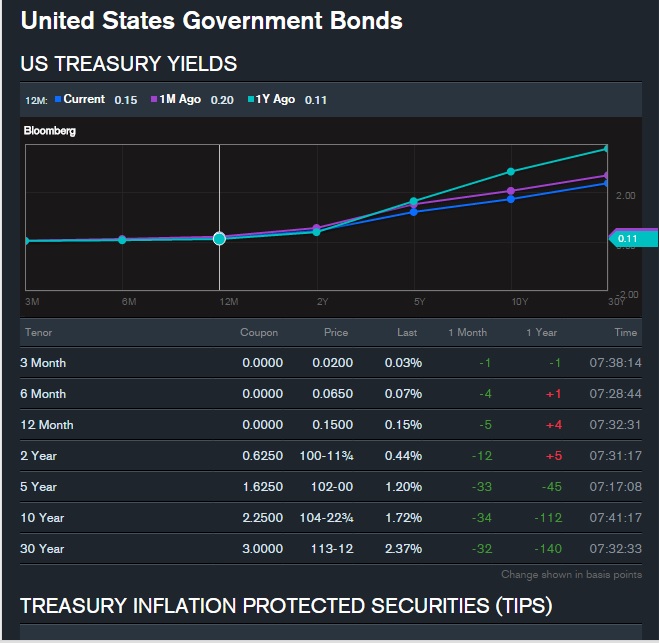
That’s why I say be wary, particularly where politically motivated entities like Central Banks are involved. ?Are you certain that the Fed will tighten this year, and that interest rates will rise? ?Do be so certain; people have been betting on that for some time, and the Fed is more than happy to let things slide until something forces their hand, or they think the risks of a move are minuscule. ?Though we are at record lows for the 30-year Treasury, rates could go lower still.
Credit: Bloomberg
Who knows? ?Maybe rates go low enough that someone relying on them to remain above a certain level?gets forced to buy into a high market already, and put in the top for prices, and bottom for yields.
In my next segment on “Learning from the Past,” I’ll go over my first really major loss where I traveled on the coattails of a famous value investor and lost royally. The point is: don’t rely on the kindness of strangers. Analyze where things can go wrong, and where other parties may have a different view than you do. Why are you smarter than they are? If they are in a position of power, what makes you think they will use it in your favor, rather than act in their own interests? As an example, just because the banks were bailed out last time does not mean that it will happen next time. The players and politics could be vastly different, with policymakers finally realizing that they only have to protect depositors, and nothing more.
So be wary. ?More next time, and I should be returning to a more regular blogging schedule once again. ?My extracurricular project nears completion. ?More on that later also.
Photo Credit: Hans and Carolyn || Do you have the right building blocks for your model?
Simulating hypothetical future investment returns can be important for investors trying to make decisions regarding the riskiness of various investing strategies. ?The trouble is that it is difficult to do right, and I rarely see it done right. ?Here are some of the trouble spots:
1) You need to get the correlations right across assets. ?Equity returns need to move largely but not totally together, and the same for credit spreads and equity volatility.
2) You need to model bonds from a yield standpoint and turn the yield changes into price changes. ?That keeps the markets realistic, avoiding series of price changes which would imply that yields would go too high or below zero.?Yield curves also need ways of getting too steep or too inverted.
3) You need to add in some momentum and weak mean reversion for asset prices. ?Streaks happen more frequently than pure randomness. ?Also, over the long haul returns are somewhat predictable, which brings up:
4) Valuations. ?The mean reversion component of the models needs to reflect valuations, such that risky assets rarely get “stupid cheap” or stratospheric.
5) Crises need to be modeled, with differing correlations during crisis and non-crisis times.
6) Risky asset markets need to rise much more frequently than they fall, and the rises should be slower than the falls.
7) Foreign currencies, if modeled, have to be consistent with each other, and consistent with the interest rate modeling.
Anyway, those are some of the ideas that realistic simulation models need to follow, and sadly, few if any follow them all.
Yellen Comments Boost Demand for Treasury Bonds?http://t.co/2lzFhL97br?Carry trade rescued, grows larger 4a later day of reckoning $$ $TLT?May 10, 2014
One of the Best Retirement Deals 9 of 10 People Ignore?http://t.co/oYw4xRjEdc?Contribute 2a Roth 401(k) & save big on future taxes $$ $TROW?May 10, 2014
NYSE to Curtail Order Types Amid Debate Over Their Fairness?http://t.co/JOlTvX7sie?Will b interesting 2c what they curtail $$ Affects my biz?May 10, 2014
What Baby Boomers? Retirement Means For the US Economy?http://t.co/GuECsqqWHA?Cheer up, the US is in better shape than rest of the world $$?May 10, 2014
I’m worried about a crisis bigger than 2008: Faber?http://t.co/JwpcvxA53o?”For the next six months, maybe cash is the most attractive.” $$?May 10, 2014
When Stocks and Bonds Disagree?http://t.co/BGbY9Y0C2L?@reformedbroker points out anomaly. Bond mkt bigger than stock mkt, should b right $$?May 07, 2014
research puzzle pix by tom brakke?http://t.co/xtPUCU7PDj?Bloat, which I would measure by number of days to trade away the portfolio $$ $SPY?May 07, 2014
Ten Surefire Trading Rules To Make You Rich?http://t.co/fHqVJkaVuj?@reformedbroker tongue-in-cheek way of telling you what not to do $$ $SPY?May 06, 2014
Early Tap of 401(k) Replaces Homes as American Piggy Bank?http://t.co/x16yXooOSx?If you don’t have an “out” door 4 $$, less will go “in”?May 06, 2014
The bond market is giving the stock market angst?http://t.co/rfuGqyaPTK?2 many long bond shorts, economic weakness, low govt-measured inf $$?May 06, 2014
Free Life-Insurance Offer Scrutinized?http://t.co/EZz4zbJsXS?Nothing is free; this will come out of the life insurer dumb enough 2sell it $$?May 06, 2014
Bond Returns Post Global Records as Warnings Go Unheeded?http://t.co/t0aXCtsu8T?Long bond buyers need to fund long liabilities & momentum $$?May 06, 2014
Borrowing Cash to Buy Complex Assets Is In Vogue Again?http://t.co/8urmZjge1i?Borrowed $$ is mostly being used 2buy AAA CLOs; 10x lev ~ 8%yd?May 06, 2014
Can?t Find Enough 30-Year Treasuries to Buy? Here?s Why?http://t.co/tmFjBQ4emS?Fed buying, also pensions, life insurers & speculators $$?May 05, 2014
?
Banks
Covered Bond Talks Intensify as Bank Liquidity Rules in Play?http://t.co/aM7LuzeXIK?Denmark needs bank capital concessions 4covered bonds $$?May 10, 2014
Bitcoin Breakthroughs Studied by Banks the Currency Is Out to Replace?http://t.co/Frls6s04am?May not be a currency, but a payment system $$?May 10, 2014
JPMorgan Joins Wells Fargo in Rolling Out Jumbo Offerings?http://t.co/9mJFfYArs2?High end of residential housing market is hot $$ $JPM $WFC?May 10, 2014
Fed 2 Bank Giants: Don’t Get Bigger Via Mergers?http://t.co/fjw4dDAAIZ?Have >10% of total financial system liabs can’t merge $$ $BAC $C $JPM?May 10, 2014
The Real Reason Big Banks Stay Big?http://t.co/GRvSHhDAUx?The larger the bank, the larger the management pay packets $$ $C $BAC $WFC $JPM?May 06, 2014
Rest of the World
Russian Aggression Prompts Finnish-Swedish Military Pact?http://t.co/K9amWYRP0F?It’s not an expansion of NATO yet, but reaction 2 Russia $$?May 10, 2014
China Property Slump Adds Danger to Local Finances?http://t.co/WXdGmStbU5?Local govts rely on selling property 4 revenue; now what to do? $$?May 10, 2014
Ukraine’s Arms Industry Is Both Prize and Problem for Putin?http://t.co/1RNJMzBvQ6?Has many arms joint ventures w/ Ukraine $$ #irony $MACRO?May 10, 2014
Panama Can School US on Immigration?http://t.co/2UYhldzlPJ?”Panama is the kind of country the US once was: quick to embrace workers.” $$?May 10, 2014
Draghi?s Euro Angst Rising as Rally to $1.40 Pummels?http://t.co/nLzHP74nYE?What will he do? Sell Euros & buy Dollars? Has 2 many $$ now.?May 10, 2014
Accident Leads to Scrutiny of Oil Sand Production?http://t.co/DHVJukJNVR?Little damage, but made regulators think of other bad scenarios $$?May 06, 2014
British Coins Pass Test in 800-Year-Old Ritual?http://t.co/GKfA1KhXKO?Trial of the Pyx, 1 of Britain?s oldest&strangest legal procedures $$?May 06, 2014
Global Economy
US Ready to Join 6-Nation Tax Alliance?http://t.co/PVRpUJ1ShZ?Members Will Share Information 2Fight Multinational Corporate Tax Avoidance $$?May 10, 2014
Ron Wyden: We Must Stop Driving Businesses Out of the Country?http://t.co/ypwwGbrWlM?Cutting corporate taxes to 24% would be a start $$ $SPY?May 10, 2014
Corporate Tax Planners Vexed by New International Tax Guidelines?http://t.co/LcCyHgfDc7?If elites agree, can limit tax leakages 2 havens $$?May 10, 2014
Decoding Dollar Turns Into Wall Street?s Parlor Game?http://t.co/PeI1wrlq4v?Bad speculation on strengthening $$ fails, trade gets reversed?May 10, 2014
World Economy Stabilizes in Great Moderation 2.0?http://t.co/yCIRqXpF9h?Really seems 2 early 2b trotting out an idea like this $$ $SPY $TLT?May 10, 2014
How Russia Inc. Moves Billions Offshore & a Handful of Tax Havens May Hold Key to Sanctions?http://t.co/ylIL6w66EF?Expropriation risk $$?May 05, 2014
Tax Break ?Blarney?: U.S. Companies Beat the System With Irish Addresses?http://t.co/Ia2cM1brCS?Maybe a “Value Added Tax” could fix this $$?May 05, 2014
Companies & Industries
?
Fat-Destroying Machine Doubted by Stock Traders?http://t.co/2Klv4c4ozG?$ELOS uses ultrasound 2 heat up & destroy fat cells. Does it work? $$?May 10, 2014
Son Makes $58B on Alibaba With Buffett-Type Return?http://t.co/uywgbnCaxg?Masayoshi Son had insight into Alibaba when invested $20M $$?May 10, 2014
Lenovo Targets Mobile as Tech Empire Grows on Castoff Businesses?http://t.co/sXSytLozjV?Squeezing good $$ out of mature tech businesses?May 10, 2014
Pitney Bowes changing stripes: Cramer?http://t.co/QzDuxGLZjT?Talks about their partnership w/ $EBAY to seamlessly estimate shipping $$ $PBI?May 10, 2014
5 quality stocks that are missing out on the bull run?http://t.co/8GTmjMt46J?Quality often misses out when credit spreads r tight $$ 2005-7??May 10, 2014
Alibaba Partners Keep Control After Shunning Hong Kong for US?http://t.co/4XvRaqoUM5?A partnership will govern, limiting takeover efforts $$?May 10, 2014
Wal-Mart Notches Web Win Against Rival Amazon?http://t.co/3f9chtgyME?Still $AMZN is 6x larger than $WMT in online sales, long way to go $$?May 06, 2014
IBM’s Watson supercomputer can help settle your debates?http://t.co/cFmXZXmEV6?Ask Watson a question, will give top 3 args for & against $$?May 06, 2014
Symantec Develops New Attack on Cyberhacking?http://t.co/xbeAQgcnab?Declaring Antivirus Dead, Firm Turns2Minimizing Damage From Breaches $$?May 06, 2014
Buffett Phase Two Means Seeking Deals More Enduring Than Stocks?http://t.co/FyERjB7YO5?Trying to build the best long-term conglomerate $$?May 05, 2014
?
US Politics & Policies
Benghazi Isn’t Iran-Contra?http://t.co/otSpoLR38P?But the comparison reflects poorly on the Obama administration $$?May 10, 2014
SEC Finds Illegal or Bogus Fees Majority of Buyout Firms?http://t.co/TwU954gwzm?Who pays what expenses? How r fees & returns calculated? $$?May 10, 2014
What Timothy Geithner Really Thinks?http://t.co/CxMmqJF18b?Just don’t blame him, didn’t want the job & wanted 2 leave it sooner, Really? $$?May 10, 2014
Railroad: Federal order won’t affect oil shipments?http://t.co/9nFXjxRTcP?BNSF carries most of the oil coming from Bakken FD: + $BRK.B $$?May 10, 2014
Why Nonbank SIFI Designations Put the Cart Before the Horse?http://t.co/oRQCv7r5jf?FSOC & Fed don’t get systemic risk & designating SIFIs $$?May 10, 2014
Massachusetts Scraps Its Health Insurance Exchange?http://t.co/nVB3C17iVg?Fascinating how many states had to scrap their healthcare sites $$?May 06, 2014
Why Weather Could Determine Who Wins a Race To Measure Inflation?http://t.co/2PTidHexu6?Billion Prices Project inflation measure 1%>CPI $$?May 06, 2014
The End of the Permissionless Web?http://t.co/MWyAraGxUT?Regulators want 2 become the gatekeepers for Internet innovation. It ain’t broke $$?May 06, 2014
Toilet Bowl Kills Fan in Violence at World Cup Host Brazil?http://t.co/Qx0HSiv0dB?Soccer hooliganism hits a new low, death by toilet $$ $EWZ?May 05, 2014
Other
Woman With Printer Shows the Digital Ease of Bogus Cash?http://t.co/kN4Ua9zZl0?Fascinating 2c how easy it is to convert $5s into $100s $$?May 10, 2014
Career Advice for Managers: Learn to Execute Strategy?http://t.co/jI85DW4Itj?Strategy should come b4 reaction to the problems of the day $$?May 10, 2014
Growing Number of Hispanics in US Leave Catholic Church?http://t.co/0jXt2caYjl?Most of those leaving go evangelical protestant $$ #readbible?May 10, 2014
Economics students call for shakeup of the way their subject is taught?http://t.co/vv8OL1xq9m?Right diagnosis, wrong cure, need Austrian $$?May 07, 2014
Rethink The Word ‘Cancer,’ Panel Says?http://t.co/jiuSNLF4JM?Cancer comes in many different forms; with some, early treatment is needed $$?May 06, 2014
Virtual reality preps 4 impact in healthcare, manufacturing, finance?http://t.co/taBVd2dFy1?Retirement planning, worker safety, training $$?May 06, 2014
MLB: The Year That No One Got Caught Stealing?http://t.co/Pn3itlbi36?Catchers now spend more time practicing hitting than throwing $$ $SPY?May 06, 2014
Elite Colleges Don’t Buy Happiness for Graduates?http://t.co/H2S5hTml6g?Happiness stems more from personal attitudes than college type $$?May 06, 2014
US Economy
Cancer Doctors Join Insurers in US Drug-Cost Revolt?http://t.co/OrqflkeN32?Drug costs reflect price 4 successes but paying 4 failures $$?May 10, 2014
Later Easter Drives Retail Sales in April?http://t.co/VAuXPhVGR7?Never thought Easter was that big of an economic factor $$?May 10, 2014
Record Meat Costs Mean Pricey Barbecues?http://t.co/tNr7vcb11K?Herds r smaller, as ranchers shake off past water & feed problems $$ $TSN?May 10, 2014
?
Wrong
?
Wrong: Happy Hedge Fund Managers Earn Money for Nothing?http://t.co/pOSYH3SSXO?Wrong benchmark S&P 500 4 hedgie comparison s/b t-bills $$?May 10, 2014
Wrong: Blackstone?s Schwarzman Says Individuals Need More Alternatives?http://t.co/Mnp0cjlXZ5?He’s just trolling 4 dumb $$ folks. Ignore him?May 10, 2014
?
?
Comments, Replies & Retweets
?
If the treatment is cheap enough, & has no harmful side-effects, investors will benefit from fat returns ;)?http://t.co/ROAQUU6Rpu?$$ $ELOS?May 07, 2014
“He might be comparing IRRs on PE to total returns on stocks. Trouble with that one is that capital?” ? D. Merkel?http://t.co/MhXU9vLCvG?$$?May 07, 2014
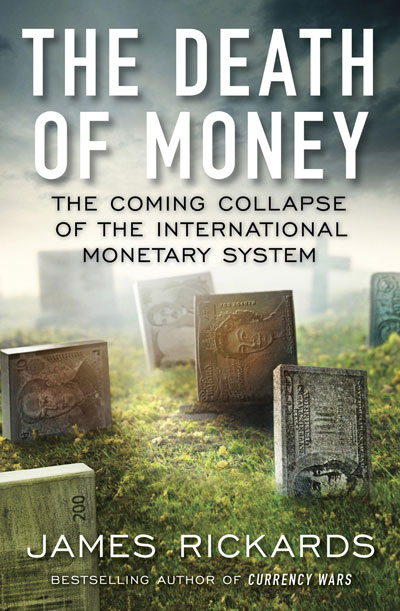
This is a hard book to review. I have respect for the author, and most of his opinions. ?But extraordinary claims require extraordinary proof. ?There is evidence here, but not extraordinary proof. ?I agree that we are in a bad spot, and that there is reason to be cautious. ?To claim that the current international monetary system will disappear by 2020 or so requires more than the book delivers.
Let me begin by saying the book is worth buying. ?It will make you think. ?Thinking is a valuable exercise in which few engage. ?Most of us imitate, which is far easier to do than thinking, and usually saves time on common issues.
The author focuses on the weaknesses of US economic policy, but is less critical of bad economic policies being pursued around the world, with the poster children being Japan, China, and the EU. ?The US has its problems, but also its unique strengths. ?Though I am a critic of US economic policy, we are better off than most other large nations.
One criticism of the book is that it is not focused. ?Make your case, and don’t go down many “rabbit trails.” ?That said, the rabbit trails are interesting, and you will learn a lot from them, though they don’t support the central thesis of the book. ?I think the book needed a better editor, because a tighter book would have made the case better.
Here’s the main difficulty: Okay, so the US Dollar is not a great store of value. ?Imagine another nation who wants a better store of value, who lets their currency rise, and their politically powerful exporters scream. ?Who will likely win? ?The exporters. ?At least, that has been the way it has worked for the last 30 years.
In order for a gold-backed currency to be introduced, there will be sacrifices, and under most conditions, it will produce some deflation. ?It is not at all certain that the nation(s) that might do this will take the short-term punishment. ?Our world is geared toward short-termism, and it harms us all.
Quibbles
The book is far too kind to the IMF, an incompetent institution, and far too kind to China, which faces a collapse in its financial system far more quickly then the US will see.
The book is also too kind to the EU, which continues the experiment of monetary union without political union, which has never worked ?before on a large scale.
Full disclosure: I asked the PR people for a copy of the ?book, and they sent it.
If you enter Amazon through my site, and you buy anything, I get a small commission.? This is my main source of blog revenue.? I prefer this to a ?tip jar? because I want you to get something you want, rather than merely giving me a tip.? Book reviews take time, particularly with the reading, which most book reviewers don?t do in full, and I typically do. (When I don?t, I mention that I scanned the book.? Also, I never use the data that the PR flacks send out.)
Most people buying at Amazon do not enter via a referring website.? Thus Amazon builds an extra 1-3% into the prices to all buyers to compensate for the commissions given to the minority that come through referring sites.? Whether you buy at Amazon directly or enter via my site, your prices don?t change.
Mt Gox: The brief reign of bitcoin’s top exchange?http://t.co/9jSwvxrzOJ?What happens when u neglect basic acctg & programming controls?Mar 01, 2014
Bitcoin Exchange Mt. Gox Files for Bankruptcy Protection?http://t.co/aobpHTmsYi?B wary of opaque transaction systems, clever may steal $$?Mar 01, 2014
Where Did the Bitcoins Go? The Mt. Gox Shutdown, Explained?http://t.co/0OkksL8TPG?Currencies can’t exist apart from legal systems $$ $BTCUSD?Feb 26, 2014
The Bitcoin Collective Delusion?http://t.co/t51GGmuWbw?Inevitable that gov’ts get involved in currencies & trade 4 punishment of fraud $$?Feb 26, 2014
Companies & Industries
Wall Street Hates JPMorgan Fee 4 $1T Junk Loans?http://t.co/laoAXelOIr?It is a private market; if the distortions r bad enuf, biz will leave?Mar 01, 2014
Line Builds $15B Value With Teddy Bears, Wicked Witches?http://t.co/ccGFjIVQsQ?Freemium model applied to Asian messaging, watch 4 IPO?Mar 01, 2014
Old Mutual Plans IPO of US Unit After Profit Increases?http://t.co/a28VUvS23r?The final reconciliation of a decade-plus of mis-investment $$?Feb 28, 2014
Oil Giants Sell Pipelines as Shale Strength Drives Deals?http://t.co/OBVZ66Tm5y?They expect oil prices 2rise as they c cheap oil scarcity $$?Feb 28, 2014
Dream of US Oil Independence Slams Against Shale Costs?http://t.co/eFRnOdt0aX?If debt funds a large part of drilling, time 2b nervous $$?Feb 28, 2014
$MSFT ‘s Culture Is Like ‘ $IBM Circa 1990,’ New Chairman Says?http://t.co/gzy5NzCaAX?Use MSFT Office/Windows Cash Cow 2build new biz $$?Feb 27, 2014
What is ‘Forbes’ worth??http://t.co/mHpDgpfkpi?The Internet chgs everything; formerly important publications get digitally hollowed out $$?Feb 26, 2014
Rolls-Royce Drone Ships Challenge $375B Industry?http://t.co/CCC9L0rynT?Problems here r considerable- control in bad weather, piracy, etc $$?Feb 26, 2014
US Issues Emergency Testing Order To Crude Oil Rail Shippers?http://t.co/bU5AuY7Ixd?Reasonable precautions 4 general safety $$ $UNP $CSX?Feb 26, 2014
Japan Post Prepares for IPO?http://t.co/yE7k137VjT?Lotsa assets, but the Q is what can be done w/them. Fuzzy situation w/no hurry $$ $EWJ?Feb 26, 2014
Zuckerberg Dines With Phone Frenemies Fretting Over Profits?http://t.co/NMga2US13J?Monet 2b made in solving mobile payments problem $$ $FB?Feb 26, 2014
Rising Premiums May Hit Small Firms?http://t.co/nBA1wjigHP?The lies told by the administration regarding cost control r astounding $$?Feb 26, 2014
Saudi?s Allure Undimmed for Bechtel to DaVita Amid Fallout?http://t.co/ikppxlukf3?Someone has 2 buy from the US; $DTA helps w/diabetes $$?Feb 26, 2014
$BAC Reaches Deal With Buffett on Preferred Stake?http://t.co/bLpgqOMJzT?Buffett gets better call protection, divs can b waived in crisis $$?Feb 26, 2014
Woes of Megacity Driving Signal Dawn of ?Peak Car? Era?http://t.co/npHTO6NtcJ?It may take ~10 yrs, this will right itself, w/fewer cars $$?Feb 26, 2014
Google Buses Fuel Inequality Debate as Boom Inflates Rents?http://t.co/CaQ4msqBnW?I f you can’t afford living in San Francisco, move out $$?Feb 26, 2014
How ARM Holdings Dominates the Chip World?http://t.co/CCFJDitgh1?$ARMH vs $INTC – 2 clever approaches that r utterly different. Who wins? $$?Feb 26, 2014
Health Law Already Has Impact on Bottom Lines?http://t.co/o4k5u6uWgB?Fitting that health insurers r getting hosed 4 cooperating w/Obama $$?Feb 26, 2014
Repsol Agrees to $5B Deal W/Argentina on $YPF?http://t.co/piwKwxqS70?$REP decides half a loaf is better than none, nondefaultable bonds $$?Feb 26, 2014
Rest of the World
?
China’s Yuan Slides Against US Dollar?http://t.co/VLBVTrLPEf?The Yuan is still a rigged market, we need 2c it float to ascertain value $$?Mar 01, 2014
Bulgaria?s Currency Board versus Ukraine?s Chaos?http://t.co/w1lAYExWuF?A currency that is anchored leads 2 better results in many ways $$?Feb 28, 2014
China’s Central Bank Engineered Yuan’s Decline?http://t.co/WmwpCa0H4L?It remains 2b seen where the yuan will trade when it freely floats $$?Feb 28, 2014
War Crimes Evident in South Sudan, Human Rights Watch Says?http://t.co/1AfsvPMYmG?Easiest way 2 call off dogs of war is not 2 loose them $$?Feb 27, 2014
Abe?s Southeast Asia Push Adds to US Ties Amid China Rift?http://t.co/3BDgdNznN4?Example of entangling alliances: Will US defend Asia? $$?Feb 26, 2014
Ortega?s Zara Fashions Tax Avoidance by Shifting Profits to Alps?http://t.co/RGBMJ4Xmzc?Govts have an interest in unifying tax policy $$?Feb 26, 2014
Crisis Gauge Rises to Record High as Swaps Avoided?http://t.co/hLKrltiEVk?Chinese corp spreads widening, same for their TED spread $$ $FXI?Feb 26, 2014
Investors Mount Attack on Norway in $20B Oil, Gas Row?http://t.co/VOPMQgMZKE?Norway becomes less predictable, may chase developers away $$?Feb 26, 2014
Ukraine Pledges to Protect Deposits as Kiev Rally Called?http://t.co/iMGsdLODA2?Must ring hollow in Cyprus as EU moves 2 support Ukraine $$?Feb 26, 2014
?
US Politics & Policy
How ADA, a Chemical Used in Rubber, Got Into 500 Food Products?http://t.co/moZqNNco85?Just because it’s not natural doesn’t mean it’s bad $$?Mar 01, 2014
Federal audit calls new school lunch rules a failure?http://t.co/RyEd0JpP7j?Missing middle ground where kids get yummy nutritious food $$?Mar 01, 2014
Study Finds SEC Staff Sold Shares B4 Cases Made Public?http://t.co/8xRzyCfIgx?SEC staffers don’t know what 2 buy, they know what 2 sell $$?Feb 28, 2014
GOP Targets Hillary Clinton With Obamacare Attacks?http://t.co/QKlHYwHUeG?It is fair to ask her what she would do differently than Obama $$?Feb 27, 2014
Here’s How Much People Are Actually Paying for Health Insurance?http://t.co/AeC4xs3y2d?Interesting, not sure what to make of it $$?Feb 27, 2014
Busted State Obamacare Websites Haven?t Caught Up to Healthcare gov?http://t.co/LLee1ovP2y?OR, MA & OR r worse than Fed’l website 4 PPACA $$?Feb 27, 2014
What Does Eric Schneiderman Know That the Rest of Us Don’t??http://t.co/aI4Crec3EZ?Oversteps his bounds, but gets sellside firms 2 stop $$?Feb 27, 2014
Dave Camp: How to Fix Our Appalling Tax Code?http://t.co/lx4VM2kHNz?Complex tax codes allow the wealthy 2 eliminate taxes that poor can’t $$?Feb 26, 2014
When the Minimum Wage Goes Up, the Menu Price Also Rises?http://t.co/ukEWzIjoje?The pain has 2go somewhere, including reducing employment $$?Feb 26, 2014
America’s 10-Year Experiment in Broadband Investment Has Failed?http://t.co/hjGuuu7JA0?We need to free up competition in the “last mile” $$?Feb 26, 2014
How Dodd-Frank Might Kill the CLO Market?http://t.co/ztV9PMdums?& we won’t miss it, b/c securitized credit is not accounted 4 properly $$?Feb 26, 2014
High-Priced Hydrogen Cars to Challenge Electrics?http://t.co/3akLFwjJuG?Hydrogen is not the solution, it is just fossil fuels in disguise $$?Feb 26, 2014
Truth About Hydrogen Power?http://t.co/McG32mWHyT?Old article, explains y hydrogen is no panacea b/c it takes fossil energy 2 produce it $$?Feb 26, 2014
The same is true of fusion power. The costs of creating Tritium at a scale needed to power a city would be astounding. $$?Feb 26, 2014
A Surprise Guest at the SEC’s Annual Gathering?http://t.co/R15fMul7CU?@mcuban shows what a measured & classy guy he can b @ SEC meeting $$?Feb 22, 2014
US Economics & Monetary Policy
?
Foreclosures Climaxing in New York-New Jersey Market: Mortgages?http://t.co/NPQeYY7Rc3?Judicial foreclosure states catching up rest of US $$?Feb 26, 2014
Home Prices in 2013 Notch Biggest Annual Gain Since 2005?http://t.co/FjTjdA7YcU?Demand from investors pads purchases, rates higher now $$?Feb 26, 2014
America?s Hottest Housing Market Has Suddenly Cooled Down?http://t.co/00uIJ4gSo3?Phoenix RE rises out of ashes on speculative demand $$ $Z?Feb 26, 2014
March 4 Hearing for Three Fed Nominees?http://t.co/McV2Tt7p29?One bullet & 2 blanks in the gun. Stanley Fischer will bring some wisdom $$?Feb 26, 2014
How to Profit from the Yellen Fed?http://t.co/4oAiBUdXDr?Yellen is core 2 the M.O. of the Fed, it’s like jazz, they make it up as they go $$?Feb 26, 2014
?
?
Market Impact
Banks Averting Bond Losses With Accounting Twist?http://t.co/VC83ByMGNC?Switching bonds from available 4 sale 2 held 2 maturity $$?Feb 26, 2014
The switch limits flexibility b/c u can’t change back w/o poss changing all back; also doesn’t change economics, moves losses 2 future $$?Feb 26, 2014
Greed Turning Losers to Leaders in Russell 1000 Index?http://t.co/vpGTVXkD9t?Could this b a harbinger of a change in the markets? $$ $SPY?Feb 26, 2014
Outcome or process ? what investment focus succeeds over time??http://t.co/edXLqAX9pg?@Ritholtz tells us to focus on process not results $$?Feb 26, 2014
Social psychology: Market madness?http://t.co/BtaVXAYWYZ?This is y the 1st priority of investment is risk control; can’t sleep @ night $$?Feb 26, 2014
10 Value Investing Blogs You’d Be Crazy Not To Follow?http://t.co/mt8tZkGRAq?Happy 2b featured among this great group of blogs $$ Thanks!?Feb 26, 2014
Other Business
Harvard Brainpower Joins MIT Fueling Boston Sports Teams?
Titles?http://t.co/OZNC8wCIJi?Bright guys using math2analyze sports in Beantown $$?Feb 28, 2014
Big Data Comes to the Farm, Sowing Mistrust?http://t.co/ayBsxp8qAt?Farmers worry that data used to help them will b used against them too $$?Feb 28, 2014
Corporate Economists Are Hot Again?http://t.co/DUn5O7Idjz?An alternative would b actuaries, they r usually better at practical models $$?Feb 27, 2014
Dwindling Midwest High School Grads Spur College Hunt?http://t.co/iVURNV69EU?Demographics now fight against colleges, many weak will die $$?Feb 26, 2014
The Joy and Freedom of Working Until Death?http://t.co/wkGRoRSJIg?Find something that u enjoy doing that supports u & yours well forever $$?Feb 26, 2014
Medical
Dad May Join Two Moms for Disease-Free Designer Babies?http://t.co/yiXUO0sLok?Designer babies:many embryos die in order 2 produce 1 child $$?Feb 26, 2014
Your Heart May Be Older Than You Are?http://t.co/46PbtkWQ7h?Cute way 2 get people to take care of themselves; may have false negatives $$?Feb 26, 2014
Mystery Medical Symptoms Hit a Surprising Number of Patients?http://t.co/6DoJnAjt6w?Stress can trigger pains; this teaches stress control $$?Feb 26, 2014
?
Pimco & Bill Gross
Pimco’s Gross: ‘U don’t always produce productive family by sweet talking&always being inclusive’?http://t.co/sjKnhN76jh?Allianz happy w/him?Mar 01, 2014
Inside the Showdown Atop Pimco, the World’s Biggest Bond Firm?http://t.co/kVtk8Zf5d8?Gross developed the theories guide Pimco & he stays $$?Feb 26, 2014
Wrong
Wrong: Templeton Braving China?s Housing Bubble?http://t.co/rjVSQUXoAe?China looks like Japan in 1989, or the developed world in 2007 #avoid?Mar 01, 2014
Wrong: NASA Scientists Discover 715 New Planets?http://t.co/6KhRpp2Y5A?Life is finely tuned on Earth +/- 10% in size of Earth -> no life $$?Feb 27, 2014
Wrong: Fed s Tarullo Eyes New Tools to Limit Interest Rate Risk?http://t.co/fA4l6omDVi?Dreams 2 undo effects of bad policy w/o undoing it $$?Feb 26, 2014
Wrong: It Takes How Much Water to Grow an Almond?!?http://t.co/u8kpW7kJFj?Misses the idea that water does get reused many times: rain $$?Feb 26, 2014
Wrong: Can Amazon Dominate in Insurance, Too??http://t.co/zAP8GkunSx?Except 4 simple products, Insurance is too complex 4 people to pull $$?Feb 24, 2014
?
Comments, Replies & Retweets
@jasonzweigwsj @AlexRubalcava I wrote an article on the problems w/zero cost investing recently?http://t.co/ALu1ijgVev?”sand in the gears”?Mar 01, 2014
RT @AlexRubalcava: Zero commission stock trading sounds like a product tailor made to amplify investors? behavioral finance mistakes.?Mar 01, 2014
“Currencies & trade cannot exist in a vacuum apart from legal systems, because fraud is a crime?” ? David_Merkel?http://t.co/7fJX26SEyP?$$?Feb 26, 2014
‘ @GSElevator Tattletale Exposed (He Was Not in the Goldman Elevator)?http://t.co/S1NVy13sZn?I don’t get out much, 1st I’ve heard of this $$?Feb 26, 2014
“Regarding First Data, many might think it quite desirable to step out of the spotlight @ $JPM &?” ? David_Merkel?http://t.co/COHGctym2A?$$?Feb 26, 2014
. @dpinsen The ancient retirement tripod of course?http://t.co/k06EUCbHa1?unless the modern one works. $$?Feb 26, 2014
@dpinsen That was icky, and more… gotta go wash my brain out… brrr.?Feb 22, 2014
Everyone would like a “money machine.”? Follow simple rules, and “Wow, this makes money.”? This is that kind of book but it has better foundations than most in its class.
The book examines three types of investing, most of which are foreign to average investors.? Most investors don’t invest in equity by shorting it, and most investors are not currency traders.
But that is what the book encourages.? I’m going to digress here, because I have to explain some salient matters, and say what I think, so that my later critique makes sense.
Volatility and credit are cousins.? After all when markets go nuts, and everything is in disarray, those that have been trying to borrow at low interest in one currency, and invest at higher interest in another currency get hosed.? Why?? Because in volatile times, the riskier currencies face capital flight versus safer currencies that have the confidence of the markets.
All of the methods mentioned in this book as a result are making bets on volatility/credit, and try to control the bet by monitoring implied volatility, credit spreads, and momentum.? They limit when they are in the market and when they are out.
I don’t have a problem with the theory here, but with the ability of average people to carry it out.? This book would be good for quantitative hedge fund managers; I am less certain about individuals here.
As an aside, what the book describes is how PIMCO has done so well at bond investing over its history — shorting volatility to pick up yield.
But the main criticism is this: the author optimized the book to fit her full data set.? When you read the last chapter, and see that you could have earned 30%+/year for 13 years, if you were as clever as the author, you should think, “Yes, if I had 20/20 foresight.”? The methods will not do as well in prospect as in retrospect.
Quibbles
There is little that I disagree with in the book on a theoretical basis.? Where I differ comes in two areas: individual investors will not have the fortitude to carry out what is a complex method of investment.? Secondly, when enough hedge fund money adopts these strategies, the pricing in the market will shift, and the hedge funds will no longer have easy money.
Who would benefit from this book:?If you are willing to do the work of a volatility-selling hedge fund manager, this is the book for you. ?If you want to, you can buy it here: Rule Based Investing.
Full disclosure: The publisher sent me the book after he offered me a review copy.
If you enter Amazon through my site, and you buy anything, I get a small commission.? This is my main source of blog revenue.? I prefer this to a ?tip jar? because I want you to get something you want, rather than merely giving me a tip.? Book reviews take time, particularly with the reading, which most book reviewers don?t do in full, and I typically do. (When I don?t, I mention that I scanned the book.? Also, I never use the data that the PR flacks send out.)
Most people buying at Amazon do not enter via a referring website.? Thus Amazon builds an extra 1-3% into the prices to all buyers to compensate for the commissions given to the minority that come through referring sites.? Whether you buy at Amazon directly or enter via my site, your prices don?t change.
Sara Eisen is smart.? How smart is Sara Eisen?? She can write twelve pages on currencies, invite some clever and opinionated people to write articles for her, and serve as editor of the book, and thus get top billing for a moderate amount of work.
There are other reasons why I think she is smart — she is an able interviewer, and maybe there is not a lot of difference between choosing people to write articles for you, and knowing what to ask someone that you choose to interview.? Both require understanding the views of the person in question.
Be that as it may, the ten writing the represent different points of view.? Let me briefly describe each one:
1) Gary Shilling — The US Dollar has its weaknesses, but is stronger than all of the alternatives, because the US possesses a lot of strengths not found in the rest of the world.
2) Stephen L. Jen — The Chinese Yuan will become a reserve currency, but it is highly unlikely that it will significantly replace the US Dollar in the intermediate term.
3) Jorg Asmussen — The Euro can be an alternative to the US Dollar if it overcomes integration issues, and continues to deepen economic integration.
4) John Taylor — Assuming the Euro survives its imbalances, a shrinking population and sclerotic economic policies will make the Eurozone less important by 2050.
5) Megan Greene — The Eurozone will be better off if weaker nations leave.
6) Anoop Singh & Papa N’Diaye — Even though rebalancing to internal growth through increased domestic consumption will slow down Chinese growth, in the long run it will lead to a better, healthier Chinese economy and currency.
7) James Rickards — Competitive devaluation is leading to currency wars, but embracing deflation and austerity as the Euro has is the right path.? We can do the same thing globally through the IMF with their SDRs.
8 ) Peter Boockvar — We need to tie the hands of the Central Bankers, because they overshoot and make economic volatility worse.? One way to do so is through a gold or other commodity standard.
9) Robert Johnson — Much like the authors in Chapter six, except more pessimistic about whether it will happen.
Do You Want a Conclusion or Not?
This? book offers no unified point of view or conclusion, and that is a strength, because it mirrors the debate that exists in the world today.? If you are not confused, you don’t get it.? That said, the book could have been much stronger if the ten authors were allowed to respond to the other authors briefly, with a brief rebuttal from the original author.? The weakness of the book is that there is no interaction, no attempt to see how the views fight or agree with each other.? This could have been a better book, but I recommend it as it is.
Full disclosure: The publisher sent me the book after asking me if I wanted it.
If you enter Amazon through my site, and you buy anything, I get a small commission.? This is my main source of blog revenue.? I prefer this to a ?tip jar? because I want you to get something you want, rather than merely giving me a tip.? Book reviews take time, particularly with the reading, which most book reviewers don?t do in full, and I typically do. (When I don?t, I mention that I scanned the book.? Also, I never use the data that the PR flacks send out.)
Most people buying at Amazon do not enter via a referring website.? Thus Amazon builds an extra 1-3% into the prices to all buyers to compensate for the commissions given to the minority that come through referring sites.? Whether you buy at Amazon directly or enter via my site, your prices don?t change.




 Everyone would like a “money machine.”? Follow simple rules, and “Wow, this makes money.”? This is that kind of book but it has better foundations than most in its class.
 Sara Eisen is smart.? How smart is Sara Eisen?? She can write twelve pages on currencies, invite some clever and opinionated people to write articles for her, and serve as editor of the book, and thus get top billing for a moderate amount of work.